Introduction
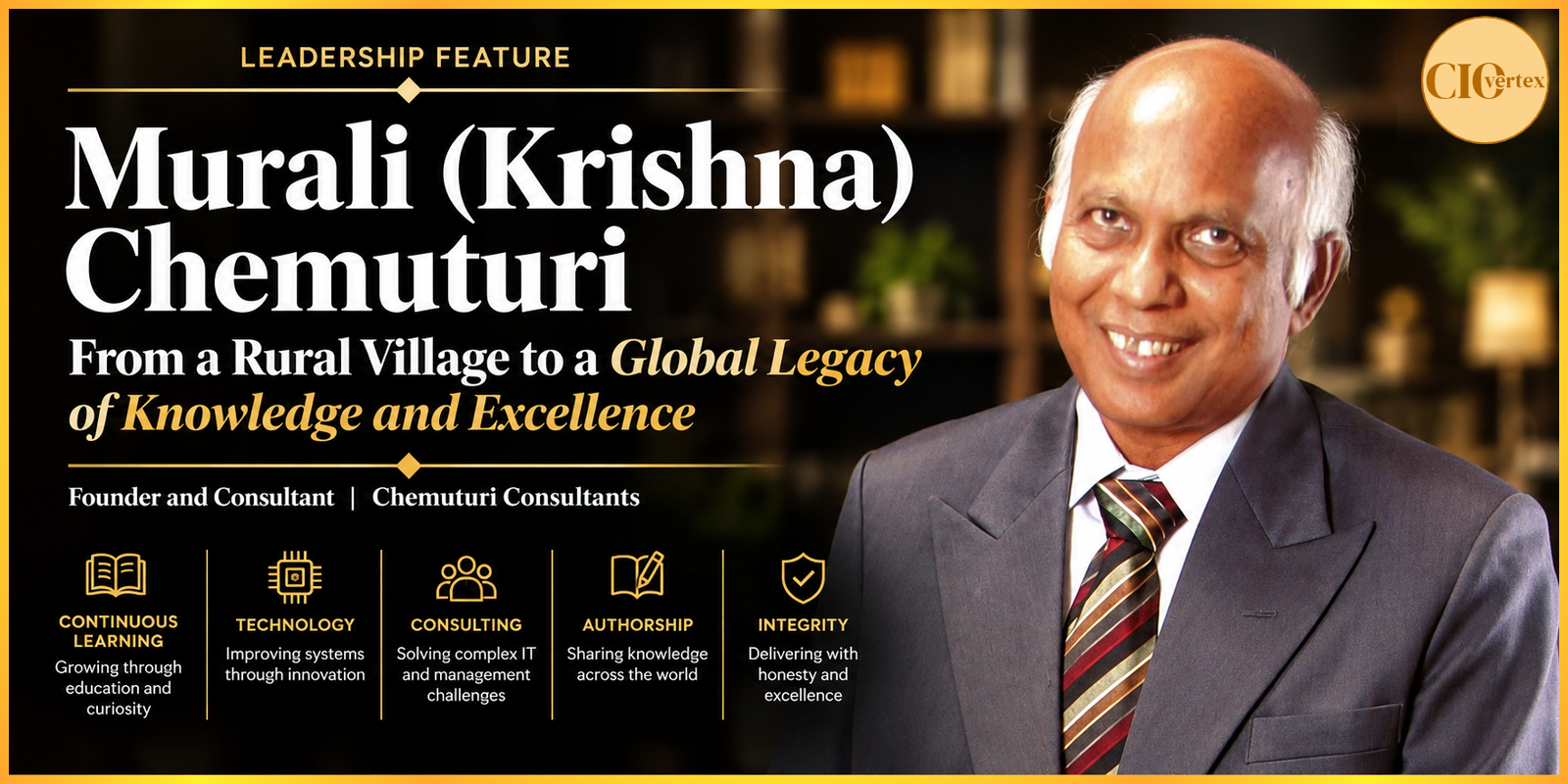
Success is often measured by wealth, professional titles, or the recognition one receives during a career. For Murali (Krishna) Chemuturi, however, its deeper meaning lies in what a person leaves behind—the knowledge shared, the lives influenced, the challenges overcome, and the difference made to the world. From humble beginnings in a small village in Andhra Pradesh, India, to a distinguished career in engineering, technology management, consulting, and authorship, his journey reflects the enduring power of education, perseverance, integrity, and an unwavering commitment to excellence.
As a professional, consultant, and author, Chemuturi has built his career around a simple principle: sincere effort, supported by continuous learning, can overcome limitations that initially appear insurmountable. His experiences across Electronics Corporation of India Limited (ECIL), Tata Consultancy Services (TCS), and his independent consultancy have shaped a philosophy grounded in practical problem-solving and professional responsibility. Through his books on information technology and management, he has extended that philosophy beyond individual assignments, contributing knowledge that is used in postgraduate education across universities and held in libraries worldwide.
His story is not merely one of professional advancement. It is a journey from being a young student with limited opportunities to becoming a producer of knowledge whose work reaches readers, practitioners, and students across countries.
Humble Beginnings and the Transformative Power of Education
Chemuturi was born into a lower-middle-class family in Chityala, a village in the West Godavari district of Andhra Pradesh. At the time of his birth, the village was classified as a tribal village, and its environment was predominantly shaped by agriculture, particularly rice cultivation. His father had not completed high school, while his mother had completed middle school, an accomplishment for a girl in the pre-independence era.
In a setting where educational and economic opportunities were limited, there was little room for elaborate career aspirations. The immediate priority was survival and supporting a family of six. By the time Chemuturi completed high school, his father was already over sixty, making it imperative for him to begin earning as soon as possible.
Higher education, therefore, was not initially a journey driven by privilege or unlimited choice. It was a practical decision shaped by necessity. With limited financial resources and no capital to establish a business, Chemuturi chose a diploma in electrical engineering at a polytechnic, seeking the most direct route to employment.
After considerable difficulty, he secured a position as a technical assistant at Electronics Corporation of India Limited, a Hyderabad-based organization. That opportunity transformed his circumstances. It introduced him to a professional environment where he could learn alongside some of the country’s most capable technical minds and gain access to an entirely new world of knowledge.
Chemuturi approached this opportunity with an exceptional appetite for learning. While working, he attended evening classes to advance his qualifications, earning a degree in industrial engineering, a postgraduate diploma in computers, and an MBA. His education became a continuous process of professional development, undertaken alongside the responsibilities of employment.
The library at ECIL played a particularly important role in this evolution. Rich in technical books and international journals, it provided an invaluable resource for someone determined to expand his horizons. Chemuturi read extensively, exploring subjects beyond his immediate responsibilities and developing the breadth of understanding that would later distinguish his professional work.
He entered ECIL as a young man from a rural background with a technical diploma. He emerged after 19 years as a postgraduate-qualified engineer and a mature professional equipped with knowledge, competence, and the confidence to tackle demanding assignments.
For Chemuturi, ECIL was more than an employer. It was the environment in which education, opportunity, and personal initiative combined to redefine what he could achieve.
Challenging Convention Through Technology and Innovation
Chemuturi’s early professional years were marked by a willingness to question established methods and identify opportunities to improve productivity. Working in ECIL’s manufacturing division, which produced control systems for atomic power plants, he recognized the potential of computers to improve engineering and business processes.
His first major initiative involved introducing computer-aided design (CAD) to improve the productivity of preparing engineering drawings. At a time when conventional methods remained prevalent, he championed the use of technology to make the process more efficient. The implementation proved highly successful and was followed by the adoption of CAD in other divisions of ECIL.
The achievement demonstrated his ability to connect technical knowledge with practical organizational needs. Rather than viewing technology as an end in itself, he saw it as a means of improving how work was performed.
His next initiative was considerably more contentious. Chemuturi proposed moving the manually operated material management function onto a computer network built around low-cost personal computers. At a time when PCs were commonly regarded as word-processing machines and serious computing was associated with mainframe systems, the proposal challenged prevailing assumptions.
The resistance was substantial. His idea faced skepticism, criticism, ridicule, and direct opposition. Convincing senior executives, including the chief executive, required persistence and a clear explanation of the proposed solution’s practical value. The fact that ECIL itself had a computer manufacturing division added another layer of complexity, as his proposal did not rely on the mainframe systems produced by that division.
Nevertheless, Chemuturi continued advocating for the approach. Eventually, the chief executive approved the proposal, and its implementation became another major success.
These experiences reveal a defining characteristic of his professional approach: the ability to persist with a sound idea despite resistance, supported by a willingness to do the work necessary to demonstrate its value.
His achievements at ECIL attracted attention beyond the organization. The regional manager of TCS encouraged him to apply for a position, opening the door to the next defining phase of his career.
TCS: A New Chapter in Professional Growth
Chemuturi’s recruitment into Tata Consultancy Services marked a significant transition. Despite being invited to apply, he underwent four rounds of interviews and a rigorous written examination before his appointment received personal review and approval from TCS Director F. C. Kohli.
He recalls that recruitment at the time strongly favored candidates from prestigious institutions, whereas his academic journey had been shaped by regional schools, a polytechnic education, and evening classes pursued while working.
His appointment was therefore a meaningful milestone. It demonstrated that the competence he had developed through sustained effort could earn him a place in a highly competitive professional environment.
At TCS, Chemuturi assumed independent responsibilities and continued developing as a professional and leader. His experience strengthened his understanding of complex assignments, organizational expectations, and the importance of delivering dependable results.
He also developed a reputation for taking on difficult work. Assignments that appeared particularly challenging, or that others had struggled to complete, frequently came his way. In both ECIL and TCS, he learned that professional credibility was built not simply through accepting responsibility but through seeing difficult tasks through to successful completion.
This period reinforced his conviction that capability is demonstrated through outcomes. Titles and credentials may open doors, but the ability to analyze a problem, persist through uncertainty, and deliver a workable solution determines the value a professional ultimately brings.
Turning Difficult Assignments into Defining Achievements
Some of Chemuturi’s most memorable achievements emerged from situations in which the consequences of failure were significant.
At TCS, he was assigned a major project that had gone seriously wrong and needed to be recovered. Completing the assignment required extraordinary commitment, including working through four days and nights with only brief periods each morning to return home, freshen up, and resume work. He remained focused until the project was successfully completed.
Another demanding engagement involved a client in the United States whose delivery for New York City’s Department of Housing Preservation and Development (HPD) had been rejected. The client contacted Chemuturi in the middle of the night, seeking help to resolve the situation.
Chemuturi took on the task of reworking the entire project. His efforts resulted in an accepted delivery, allowing the client to receive payment in full.
These experiences illustrate his ability to work under pressure while maintaining a strong focus on the required outcome. They also explain why he has long been drawn to assignments that demand resourcefulness, patience, and sustained effort.
One of his role models in this regard was Detective Lebel, the fictional investigator in Frederick Forsyth’s novel The Day of the Jackal. Chemuturi admired the character’s understated approach: disciplined investigation, meticulous attention to detail, and hard work without unnecessary glamour.
He saw in Lebel a model of professional effectiveness. Success did not depend on dramatic gestures or the appearance of brilliance, but on methodical effort that ultimately produced results.
This philosophy became central to Chemuturi’s own working style. When faced with a difficult assignment, he focused on understanding the problem, applying his knowledge, and continuing until the work was completed successfully.
The Discipline Behind Exceptional Results
Chemuturi’s commitment to hard work was not limited to major projects. It was reflected in the everyday decisions through which he sought to improve systems and resolve practical problems.
During the implementation of CAD at ECIL, he obtained special permission to work after regular office hours. After observing that keeping the building open late required additional security arrangements, the shift security officer asked whether the extra expenditure and burden on the security guard could be avoided.
Chemuturi responded by reorganizing his schedule. He began using his lunch and tea breaks to work on the CAD system, allowing him to continue stabilizing the implementation without requiring the building to remain open late. He maintained this routine for approximately a month.
Another example arose during his deputation to Godavari Fertilisers. The organization needed to retrieve shareholder data from a tape cartridge supplied by its registrar, but it did not have the required tape drive.
Chemuturi located a facility with the necessary equipment. Because access was available only after normal working hours, he transported a disk from his organization’s computer system to the facility, connected it to the other computer, copied the data, and then restored the system to its original configuration. He verified that the equipment was working properly before returning home at approximately 3 a.m.
The work did not end there. He also had to clean the extracted data, removing additional characters from records so that the information could be loaded successfully into database tables. The effort combined technical knowledge, practical judgment, and a willingness to take responsibility for a problem that extended beyond ordinary working hours.
These stories are characteristic of Chemuturi’s approach. He believes that most problems can be solved through sincere effort, careful thinking, and resourcefulness.
When criticism arises, he prefers to respond by improving the work rather than becoming distracted by the criticism itself.
His philosophy does not promise an easy path. Instead, it emphasizes persistence and a readiness to do the less visible work required to achieve a dependable outcome.
From Corporate Leadership to Independent Consultancy
A further turning point arrived in 2001. After listening to a televised discourse by Ananda Murthy Guru Ma, Chemuturi was inspired to leave corporate employment and establish his own consultancy.
This decision marked a shift from contributing within large organizations to building an independent professional practice. Through Chemuturi Consultants, he began offering services in IT and management, including software engineering consultancy, professional training, troubleshooting, process definition, and certification support for clients in India and the United States.
His consultancy drew on the experience accumulated across engineering, manufacturing, computing, project recovery, and management. It also gave him an opportunity to share his knowledge more directly with organizations seeking to improve their processes and professional practices.
As he worked to attract visitors to his consultancy website, Chemuturi began writing articles on software engineering and related subjects, making them available for free download. Over time, the material on software estimation grew to approximately 100 pages.
Recognizing the value of bringing these articles together, he compiled them into a booklet and uploaded it to his website and other platforms. He also developed a software estimation tool, combining practical experience with a structured approach to a subject of considerable importance in software project management.
What began as an effort to share useful information gradually opened an entirely new professional avenue.
Becoming an Author and Educator to a Global Audience
Chemuturi’s transition into authorship began through a conversation with a training professional in the United States who was involved in preparing people for Project Management Institute (PMI) certification. After learning about Chemuturi’s software estimation tool, the professional suggested developing a book on the subject.
Chemuturi returned to India and began submitting a book proposal to publishers. Drew Gierman of J. Ross Publishing responded, invited him to discuss the project, and guided him toward developing a more comprehensive manuscript of at least 250 pages.
Chemuturi followed that guidance, and the publisher offered him a contract. The resulting book established his presence as an author and led to three additional publishing contracts.
Over time, he authored seven books on information technology and two on management, turning years of professional experience and independent study into resources for a wider audience.
According to Chemuturi, his books have been prescribed reading at the postgraduate level in more than 65 universities across over 20 countries, including India and the United States. His works are also held in more than 800 libraries worldwide, including collections at Stanford University, Princeton University, and CERN.
These milestones represent a particularly meaningful dimension of his career. His work has moved beyond solving individual organizational problems to supporting the education and development of students and professionals who may never meet him personally.
The journey from a young man who relied on a technical library to expand his own knowledge to an author whose books enter academic and institutional collections reflects a profound evolution.
Chemuturi describes this transformation as moving from being a consumer of knowledge to becoming a producer of knowledge. It is a distinction that captures both his personal achievement and his wider contribution to the professional community.
A Personal Definition of Success
Chemuturi’s understanding of success has evolved alongside his career. In the early stages of his life, success meant securing employment and helping his father support the family. As his responsibilities grew, it came to mean providing for his wife and children, improving his circumstances, and contributing meaningfully to his employer.
Later, his ambitions developed beyond financial stability and professional advancement toward a deeper sense of self-actualization.
Today, he measures success by the difference a person leaves behind. He believes that a meaningful life should benefit family members, colleagues, employers, and the wider community. He also places importance on contributing to the reputation of one’s family, native village, and country.
By this definition, success is not simply what a person accumulates during a lifetime. It is what remains useful to others after the work itself has been completed.
His books are a source of particular satisfaction because they embody this philosophy. Their use in postgraduate education and their presence in libraries worldwide offer evidence that the knowledge he has developed can continue serving others beyond his immediate professional engagements.
For Chemuturi, the significance of these achievements is inseparable from where he began. The educational opportunities that once seemed distant became accessible through persistence, and the knowledge he acquired eventually became knowledge he could share.
His story demonstrates that professional contribution is not determined solely by one’s starting point. It can be shaped by what a person learns, how consistently that knowledge is applied, and the willingness to make it available to others.
Integrity, Humility, and the Responsibility to Deliver More
Honesty has been one of Chemuturi’s central values since early adulthood. He recalls realizing in his late twenties that he was not particularly good at telling lies to escape punishment. What he initially regarded as a weakness gradually became a defining strength.
His commitment to honesty shaped the trust he built with colleagues and clients. It also encouraged him to accept responsibilities beyond the boundaries of his immediate expertise, developing a broad understanding of different technical and managerial disciplines.
That breadth proved valuable in his consultancy and authorship. He developed expertise in material management without having worked directly in a warehouse or purchasing department, and he wrote a book on quality assurance without having served in a dedicated quality department. His approach combined research, practical problem-solving, and a willingness to learn whatever a task required.
Another principle that guided him was the slogan, “Do it well or not at all.” After encountering it in an article during the 1970s, he adopted it as a personal standard. He sought to complete every task to the best of his ability rather than accept a level of performance he considered inadequate.
His years at TCS further strengthened this philosophy. He recalls the guidance associated with J. R. D. Tata: the quality of a delivery should reflect the standards of the Tatas, not simply the fees paid by a client.
Chemuturi internalized that principle as a professional commitment to deliver more than he received. In his consulting practice, he sought to base his fees on the effort required rather than the full financial benefit a client might derive from his work. On some occasions, he even forwent payment after completing an assignment successfully.
For him, the relationship between quality and compensation should not diminish the responsibility to deliver dependable work.
Humility is equally important in his philosophy. He believes that intelligence, education, and talent must be accompanied by an awareness that there is always more to learn. By remaining open to other people’s strengths, professionals can avoid the complacency that sometimes undermines otherwise capable individuals.
Together, honesty, humility, and commitment to quality form the foundation of his professional identity.
Navigating Criticism with Resilience
Chemuturi’s career has also involved difficult professional relationships and experiences in which he felt that his contributions were not fairly recognized. He recalls encountering resistance from colleagues and superiors, including situations where he believed jealousy or organizational politics affected the way his work was perceived.
At ECIL, he says, senior management supported him during a difficult period involving a superior. His experience at TCS was more challenging, eventually leading him to leave the organization and pursue formal avenues to address his grievances.
These experiences were not without frustration. Nevertheless, he remained committed to his belief that the most constructive response to adversity was to continue developing his capabilities and producing work of substance.
He did not allow difficult professional experiences to erase the value of what he had learned or the contributions he had made. Instead, he continued his career through consulting and authorship, creating new opportunities to apply his knowledge independently.
His experience reinforces a distinction that runs throughout his story: external recognition can be important, but a person’s commitment to the quality of their work must not depend entirely on whether others acknowledge it.
By continuing to learn, write, and contribute, Chemuturi found ways to carry his professional purpose forward.
Advice for the Next Generation: Strive Tirelessly Toward Excellence
Chemuturi’s advice to younger professionals is direct: do not look for shortcuts around sincere effort, remain honest, cultivate humility, and make continuous learning a priority.
He returns to Detective Lebel from The Day of the Jackal as an illustration of the value of disciplined work. The character’s success, in Chemuturi’s interpretation, comes not from presenting an impressive new theory but from methodically pursuing the task until he reaches the required result.
For aspiring professionals, the lesson is that determination and careful execution remain valuable even when a problem appears resistant to conventional solutions.
He also urges people to deliver more than they receive from employers and clients. Recognition may not always arrive immediately, but he believes that consistently high-quality work strengthens a person’s reputation over time.
Another central recommendation is to share knowledge without discrimination. Drawing inspiration from Rabindranath Tagore’s vision of a world in which knowledge is free, Chemuturi encourages professionals to pass on what they learn rather than treating information as something to be guarded exclusively for personal advantage.
He also invokes the image of lighting one lamp with another: the light is shared without diminishing the original flame. In the same way, sharing knowledge can expand opportunities for others while strengthening the wider community.
His message is ultimately one of responsibility. Do your best, continue learning, tell the truth, remain humble, and treat every task as worthy of conscientious effort.
A Legacy Built on Knowledge and Contribution
Murali (Krishna) Chemuturi’s journey is a powerful illustration of what sustained effort can accomplish across a lifetime. From a village where educational opportunities were limited, he advanced through technical education, engineering, manufacturing innovation, technology leadership, consulting, and international authorship.
At ECIL, he helped introduce computer-based approaches that improved established processes. At TCS, he developed his professional capabilities and undertook demanding assignments that required persistence and technical judgment. Through Chemuturi Consultants, he created an independent platform for sharing his experience and helping organizations address IT and management challenges.
His books have extended that contribution into universities, professional communities, and libraries across the world. They represent more than a publishing achievement; they are a continuation of the curiosity and commitment to learning that first transformed his life.
Yet Chemuturi’s own definition of success reaches beyond the number of projects completed or books published. He measures it by the lasting difference a person makes and by whether others find value in the knowledge and effort left behind.
His story carries a lesson for professionals at every stage of their careers: where you begin need not determine where you can go. Education can expand opportunity, integrity can establish trust, hard work can resolve difficult problems, and knowledge shared with others can create a legacy that continues long after an individual assignment or career has ended.
For Chemuturi, the journey from a consumer of knowledge to a producer of knowledge is not simply a personal accomplishment. It is the clearest expression of the principles he has followed throughout his life: learn continuously, work sincerely, deliver with excellence, and leave the world richer in knowledge than you found it.
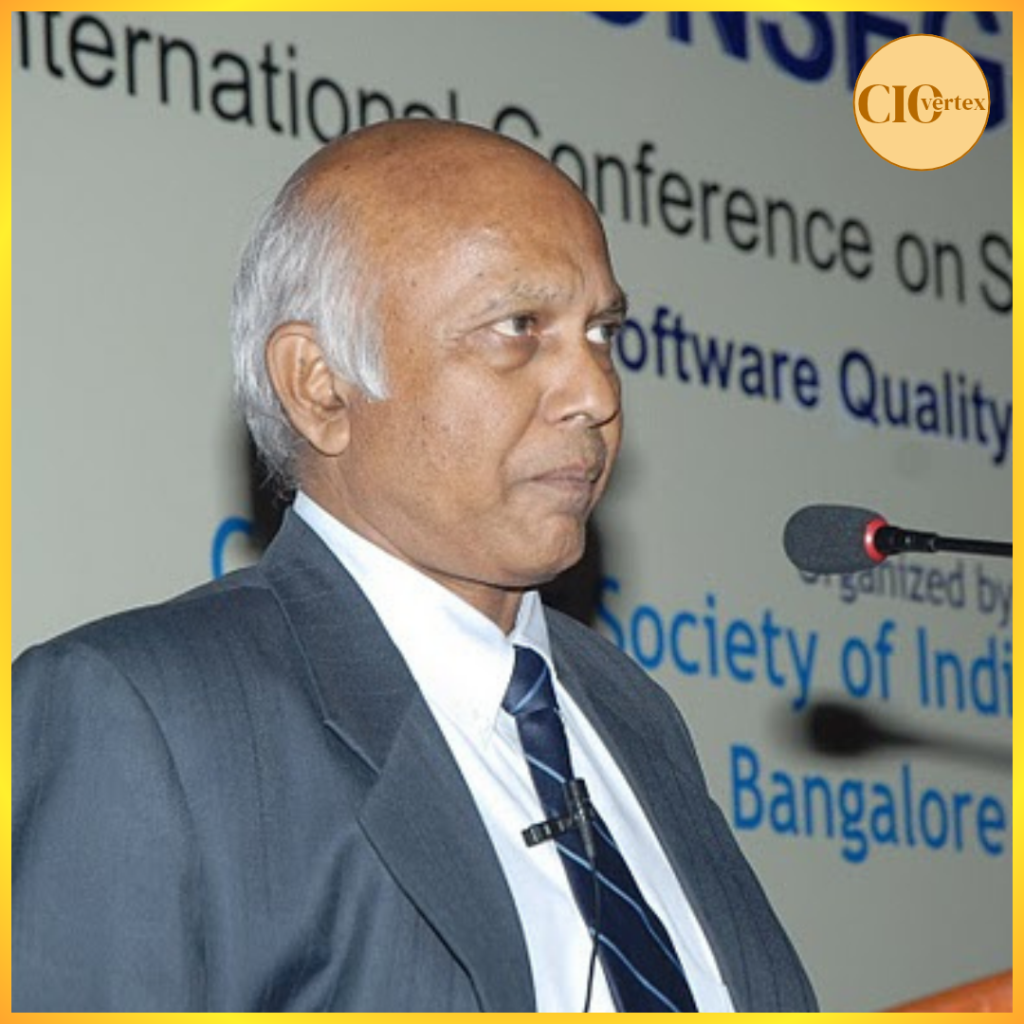
ABOUT MURALI (KRISHNA) CHEMUTURI
Murali (Krishna) Chemuturi is the Founder and Consultant of Chemuturi Consultants, with expertise in IT, software engineering, and management consulting. An accomplished author, he is committed to solving complex challenges and sharing knowledge that supports professional growth and excellence worldwide.