Introduction
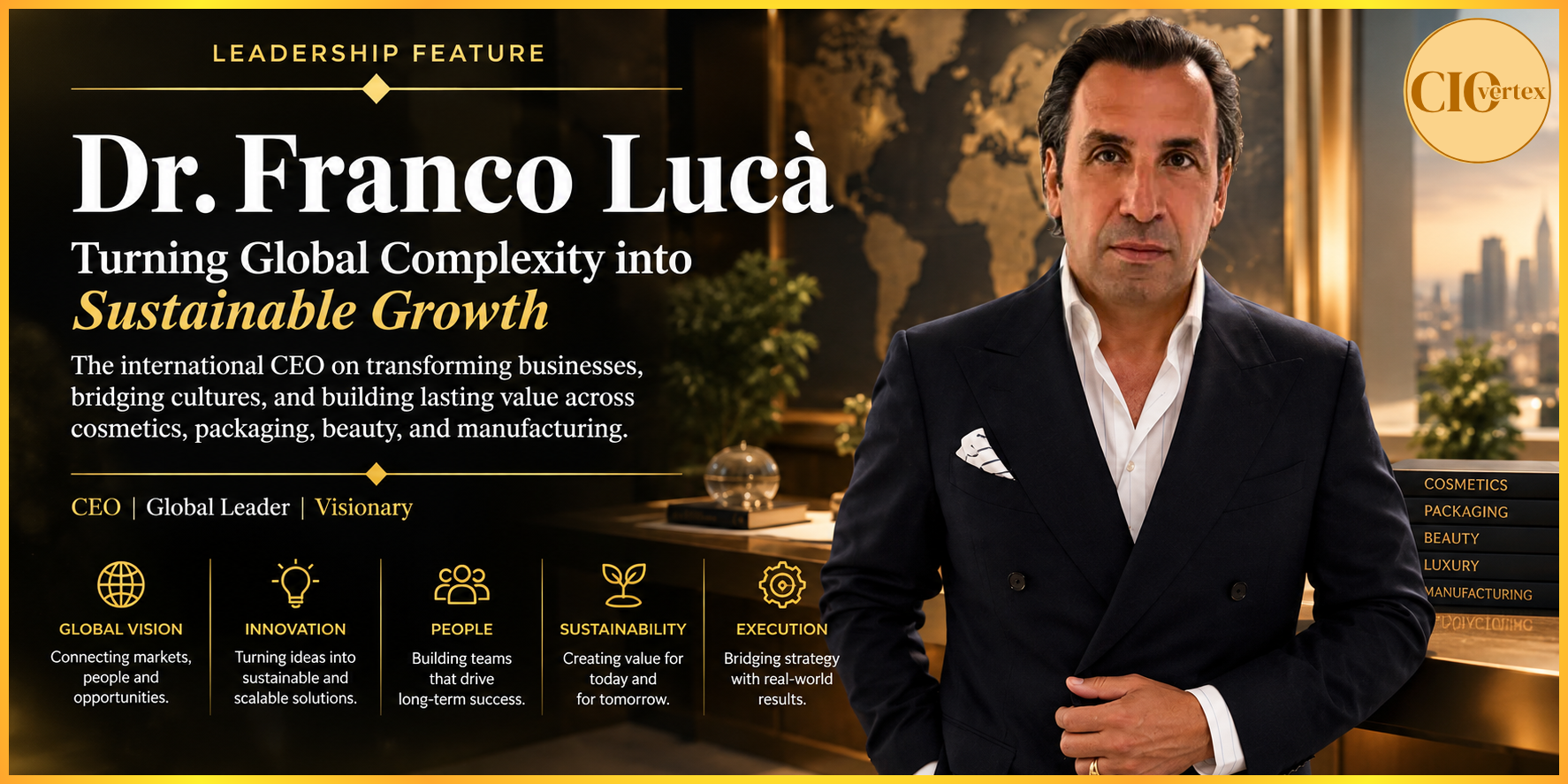
For more than three decades, Dr. Franco Lucà has worked at the intersection of cosmetics, packaging, beauty, luxury, and international manufacturing industries where creativity must ultimately meet precision, customer expectations, operational discipline, and commercial reality.
His career has taken him across Europe, North America, and Asia, giving him a perspective shaped not only by different markets, but by different cultures, leadership styles, and ways of doing business.
Along the way, his responsibilities evolved from commercial leadership into broader organizational transformation, eventually bringing him into CEO and full P&L roles.
That progression changed the way he understood business.
Growth was no longer simply about increasing sales or entering new markets. It was about understanding an organization as a complete system, its customers, people, products, operations, finances, innovation, and strategy and ensuring that all of those elements move in the same direction.
Today, Lucà’s leadership philosophy is grounded in a practical belief: sustainable success comes from combining ambition with responsibility, performance with people, and innovation with execution.
Where Packaging Meets Possibility
Lucà’s professional journey began in an industry that was already evolving beyond its traditional role.
Packaging was no longer simply something that protected a product. In cosmetics and beauty, it was becoming part of the product experience itself a point where design, functionality, innovation, technology, craftsmanship, and brand identity converged.
That intersection captured his attention.
Over the course of his career, he developed extensive experience across cosmetic packaging, beauty, luxury, and B2B and ODM/OEM environments, working with businesses where customer relationships and industrial execution are equally important.
For Lucà, the appeal has always been found in that combination.
A compelling idea needs to become a viable product. Innovation needs to be manufacturable. Customer expectations need to be translated into operational reality. And commercial growth needs to be supported by organizations capable of delivering consistently.
His career gradually became less about any individual function and more about understanding how these pieces could work together.
International experience added another dimension.
Having worked successfully across three continents, Lucà learned that global leadership cannot simply mean exporting one business model from one market to another. Cultures differ in how people communicate, negotiate, build trust, make decisions, and respond to leadership.
The answer, in his experience, is not to eliminate those differences.
It is to understand them.
Global capability becomes most powerful when it is combined with local understanding.
The Turning Point: From Management to Full Business Responsibility
One of the defining moments in Lucà’s career came when he assumed full P&L and CEO responsibilities.
The shift fundamentally broadened his perspective.
As a functional or commercial leader, it is possible to focus deeply on a particular part of the organization. As a CEO, every decision becomes interconnected. Customers influence products. Products influence operations. Operations influence profitability. People influence execution. Innovation influences competitiveness. Strategy determines where all of it needs to go.
The organization becomes a system rather than a collection of departments.
That perspective has shaped Lucà’s approach ever since.
Throughout his career, he has led businesses through periods of growth, organizational restructuring, international expansion, operational improvement, and strategic repositioning. In many cases, the challenge was not simply achieving growth, but creating the structures and capabilities required to sustain it.
That distinction matters.
Growth achieved without organizational strength can create fragility. Sustainable growth requires businesses to become more capable as they become larger.
It also requires leaders to recognize that the same management approach cannot necessarily be applied everywhere.
Transforming Businesses from the Inside Out
Leading teams across Europe, North America, and Asia has reinforced Lucà’s belief that international leadership requires both consistency and flexibility. The strategic direction must remain clear, but the way leaders communicate and implement that direction must respect the environment in which people operate.
For Lucà, cultural diversity is not an obstacle to overcome.
It is an opportunity to generate better questions, broader perspectives, and stronger decisions.
Among the achievements that matter most to Lucà are the transformations that take an organization from a situation where change is necessary to one where sustainable growth becomes possible.
His experience spans international expansion, market development, profitability improvement, customer relationships, operational structures, and innovation across cosmetics and packaging.
But transformation, in his view, is rarely the result of one dramatic decision.
Much of it happens behind the scenes.
It happens through listening, analyzing, negotiating priorities, developing people, resolving conflicts, improving processes, and creating alignment between functions that may initially have very different perspectives.
This is particularly important in ODM/OEM and manufacturing environments, where strategy eventually has to become something tangible.
A commercial promise has to become a product.
A product has to meet quality expectations.
Quality has to be supported by reliable delivery.
Reliable delivery has to work within competitive economics.
And ultimately, the customer has to see enough value to continue the relationship.
For Lucà, this is where leadership moves from theory into execution.
Strategy matters. But strategy creates value only when an organization can execute it.
Innovation That Can Survive Reality
Innovation has remained a recurring theme throughout Lucà’s career.
He has worked with new product concepts, advanced packaging solutions, sustainable developments, and new approaches to serving international customers. Yet his understanding of innovation is grounded in practical execution.
A good idea, he believes, becomes valuable only when it can be transformed into something reliable, scalable, and commercially successful.
That philosophy is particularly relevant in industries such as cosmetics and packaging, where market expectations are constantly changing.
Consumers increasingly look for new experiences. Brands need differentiation. Digitalization is changing how companies operate. Sustainability is becoming a more important consideration. Technology is creating new possibilities across product development and manufacturing.
For businesses operating in this environment, standing still is difficult.
But chasing every trend is not the answer either.
The challenge is identifying which changes genuinely matter and then building the capabilities to respond.
This is one reason Lucà remains deeply curious about both markets and technology.
Continuous change, rather than making his work less predictable, is part of what keeps it engaging.
The Human Architecture of International Leadership
It is easy to look at executive transformation from the outside and see only major strategic decisions.
Lucà sees something different.
He sees the human architecture underneath those decisions.
Every transformation depends on people understanding what is changing, why it matters, and how they are expected to contribute. In an international organization, that becomes even more complex because the same message can be interpreted differently across cultures.
Effective leadership therefore requires more than setting objectives.
It requires building trust.
It requires listening before leading.
It requires understanding what motivates different people and recognizing that successful collaboration does not always look identical in every market.
Lucà’s experience across three continents has taught him that an international manager has an important responsibility: to build bridges between cultures while maintaining a clear common direction.
That balance global consistency combined with local sensitivity has become central to his leadership approach.
It also explains why he does not view leadership as having every answer.
Complex organizations rarely provide simple answers.
A leader’s responsibility is often to create clarity without pretending uncertainty does not exist, establish direction while remaining open to new information, and give people enough ownership to contribute their expertise.
Sustainability Beyond the Strategy Document
Sustainability has become another important dimension of Lucà’s professional philosophy.
His doctoral research focused on change management processes for achieving business sustainability, reinforcing a principle he has encountered repeatedly in practice: lasting improvement cannot be created simply by introducing a new strategy, process, or initiative.
The organization itself has to change.
People need to understand the reason for the change. Leadership needs to support it. Processes need to reinforce it. Capabilities need to develop around it.
In that sense, sustainability and change management are closely connected.
For Lucà, sustainable growth is therefore not simply about becoming bigger.
It is about becoming better, more resilient, more innovative, and more relevant to customers.
A successful organization should be capable of continuing to perform after the original transformation initiative has ended.
That is the difference between a temporary improvement and lasting value.
A Broader Definition of Success
Earlier in his career, Lucà naturally measured success through visible business outcomes: growth, profitability, market share, successful projects, and professional progression.
Those measures still matter.
A sustainable organization needs financial strength and commercial performance.
But his definition of success has expanded.
Today, he believes meaningful success also involves developing the people and capabilities that make performance sustainable. It means building strong customer relationships, creating an adaptable organization, and leaving behind a stronger platform than the one inherited.
This perspective changes the question a leader asks.
It is no longer only:
What did we achieve?
It becomes:
What have we built that can continue creating value?
That distinction reflects the evolution of Lucà’s own leadership from achieving results to building the conditions that allow results to endure.
The Principles Behind the Executive
Behind the CEO is a set of values that extends beyond the boardroom: family, meaningful relationships, authenticity, continuous learning, perseverance, and personal responsibility.
His Italian and German background has also contributed to an appreciation for different cultural perspectives, something reinforced through years of international work.
Living and working across different environments has made one lesson particularly clear: there is rarely a single way to approach a challenge.
Different perspectives can reveal possibilities that would otherwise remain invisible.
At the same time, Lucà believes that openness should not mean losing one’s principles.
Circumstances cannot always be controlled.
Responses can.
That belief has shaped both his professional and personal approach, reinforcing the importance of responsibility, perseverance, and integrity.
For Lucà, professional ambition also needs balance. A fulfilling life cannot be defined entirely by business achievements. Family, friendships, personal development, and the ability to step back from work all provide perspective and perspective, in turn, makes leadership stronger.
Building an International Career with Purpose
For the next generation of professionals, Lucà’s advice is straightforward: remain curious, stay close to reality, and never underestimate execution.
Build expertise, but do not allow expertise to become a limitation.
Be willing to enter unfamiliar markets. Work with people who think differently. Learn from cultures that challenge your assumptions.
For those pursuing international careers, one principle stands out above all:
Listen before you lead.
Understanding how people think, what motivates them, and how they define success is essential before asking them to follow a common vision.
He also encourages young professionals to take responsibility early.
There is a significant difference between completing tasks and being accountable for outcomes.
The latter can be uncomfortable, but it is where much of the deepest professional learning occurs.
Not every decision will be correct.
That is not the objective.
The objective is to learn from every decision and become better equipped for the next one.
And throughout that journey, Lucà believes one asset becomes increasingly valuable: trust.
Professional success can be measured in many ways, but trust compounds over time.
The Road Ahead
After more than three decades across international business, cosmetics, packaging, beauty, luxury, and manufacturing, Dr. Franco Lucà’s career reflects a broader understanding of what sustainable leadership requires.
It requires ambition, but also responsibility.
It requires innovation, but also execution.
It requires global vision, but also cultural understanding.
And it requires commercial performance without losing sight of the people who make that performance possible.
His journey was never perfectly planned. Like most meaningful careers, it developed through opportunities, challenges, decisions, transitions, and continuous learning.
What has remained consistent is the willingness to recognize an opportunity, take responsibility, and go the extra mile when the objective is worth pursuing.
For Lucà, that is ultimately what sustainable leadership means.
Not simply building businesses that grow, but building organizations that become stronger through growth creating value for customers, developing people, embracing change, and leaving behind a foundation capable of carrying the journey forward.
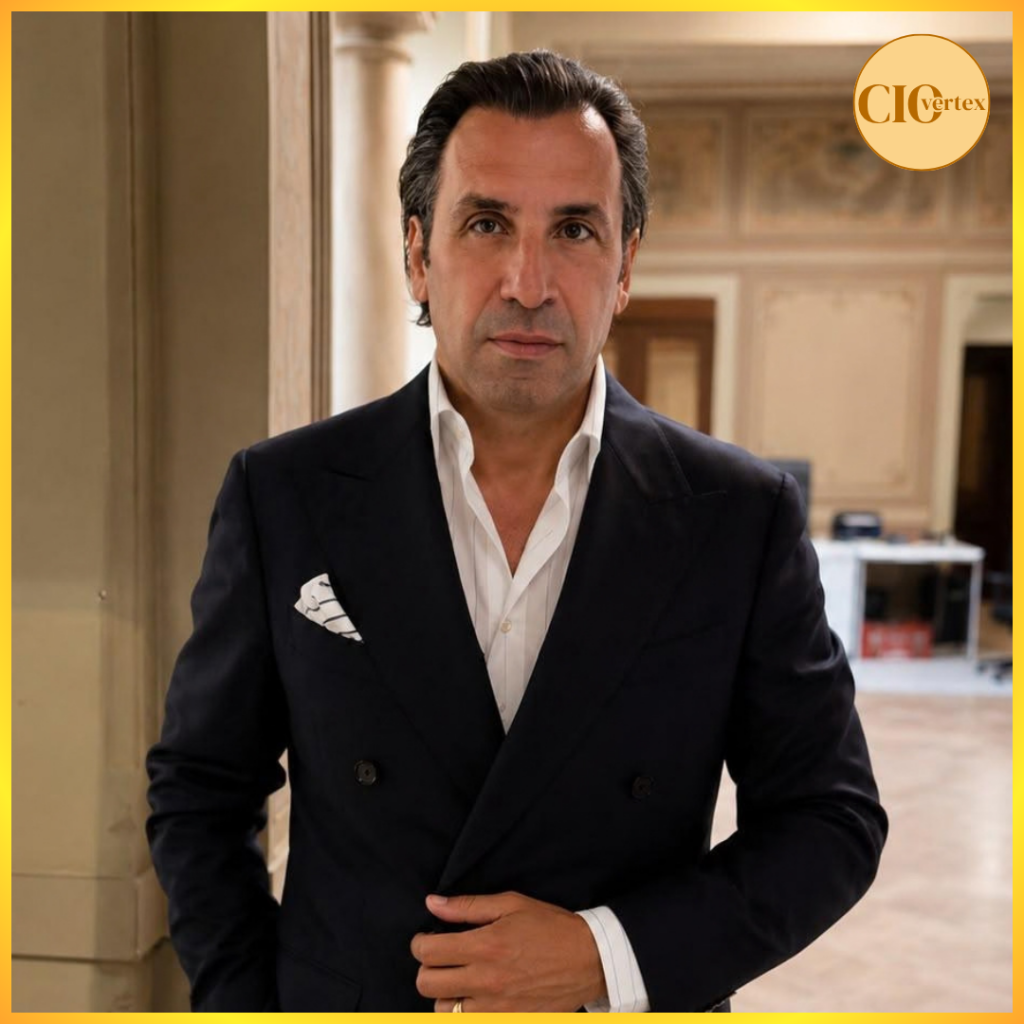
ABOUT DR. FRANCO LUCÀ
Dr. Franco Lucà is an international CEO with over three decades of experience across cosmetics, packaging, beauty, luxury, and manufacturing. His leadership focuses on sustainable growth, business transformation, innovation, and building strong organizations across global markets.