Introduction
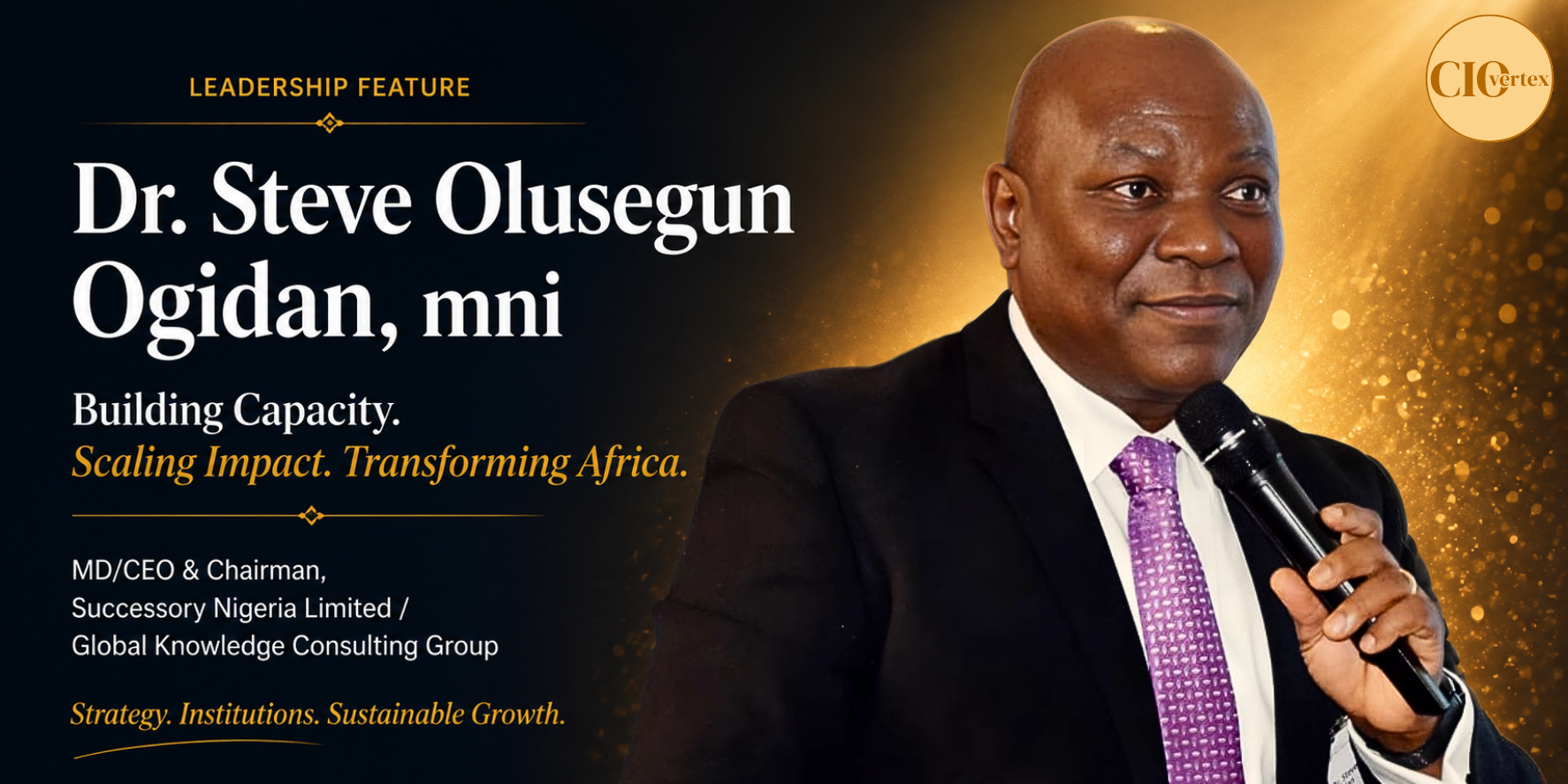
For more than two decades, Dr. Steve Olusegun Ogidan, mni, has worked at the intersection of development strategy, institutional capacity building, finance, governance, and enterprise growth. As MD/CEO and Chairman of Successory Nigeria Limited / Global Knowledge Consulting Group, he has built a career around a conviction that continues to shape his work: Africa does not simply need more funding, it needs the institutional capacity to turn resources into sustainable results.
His journey has taken him from Nigeria’s financial institutions to international development assignments across Africa, working with governments, development finance institutions, multilateral organizations, and private enterprises. Along the way, he has helped design capacity-building frameworks, strengthen financial systems, support agricultural finance, develop MSMEs, and empower professionals across the continent.
Today, his focus has evolved from building credibility and delivering individual projects to scaling impact through partnerships, technology, and people.
The Real Development Challenge: Building Capacity
Dr. Ogidan’s entry into development consulting was shaped by what he witnessed early in his career.
While working with the former Peoples Bank of Nigeria and later the Bank of Agriculture, he saw a recurring disconnect between the resources available to support development and the institutional capacity required to deploy those resources effectively.
Policies could be well designed on paper, yet communities and enterprises remained underserved because the systems, people, and organizational structures needed to execute them were missing.
That experience became the foundation of his professional philosophy.
When he eventually left the Bank of Agriculture to establish Successory Nigeria Limited, he carried with him a clear conviction: funding alone cannot transform economies. Sustainable development requires the ability to plan, manage, execute, and sustain growth.
His commitment to continuous learning became an important part of that journey. From executive education and professional development at institutions including the International Labour Organization in Turin and Harvard Business School to further learning at Columbia Business School and the Boulder Institute of Microfinance, Dr. Ogidan consistently invested in expanding his knowledge.
His objective was never simply to accumulate credentials. It was to bring international expertise and proven approaches back to Africa and adapt them to the realities of its economies.
From Founder-Centered Consulting to a Scalable Enterprise
Dr. Ogidan describes the current chapter of his career as “Scaling Impact Through Partnerships and Technology.”
In the early years of Successory, the firm’s capacity was closely tied to its founder. Dr. Ogidan was simultaneously the consultant, trainer, strategist, and problem-solver.
Eventually, he recognized that a company with continental ambitions could not remain dependent on one individual.
That realization prompted a fundamental transformation.
He began building teams, empowering younger professionals, and creating a flatter organizational structure in which even emerging professionals could take responsibility for projects and lead initiatives.
The result was a consulting organization capable of operating far beyond the personal reach of its founder.
One example of this evolution was Successory’s involvement with the NIRSAL Project Monitoring, Reporting and Remediation Offices, where the organization managed more than 850 staff across 37 locations in Nigeria while simultaneously delivering capacity-building initiatives across East and Southern Africa.
For Dr. Ogidan, the lesson was straightforward: organizations cannot scale beyond the capacity of their founders unless they deliberately build the capacity of their people.
Creating Solutions That Empower Africa
Among the many accomplishments of his career, Dr. Ogidan considers his leadership of the international expert team for the ITC/ILO particularly significant.
Between 2010 and 2012, the team designed curriculum and training manuals focused on Access to Finance for African Workers and Trade Unions.
The assignment represented more than a conventional consulting engagement. It was an opportunity to create practical tools capable of helping workers across Africa better understand and access financial services.
The work strengthened Dr. Ogidan’s position as a thought leader in development finance while reinforcing his belief in the importance of knowledge transfer and institutional capacity.
His more recent work has expanded this impact.
In 2024, he was selected by the African Development Bank to lead the Steadman Global Consulting Design Team for the Skills, Entrepreneurship, and Enterprise Development (SEED) Project for the Government of Angola. The initiative focuses on skills development, entrepreneurship, and enterprise growth as mechanisms for addressing youth unemployment and supporting economic diversification.
Working alongside specialists in enterprise development, innovation, digital economy, and vocational training, Dr. Ogidan helped develop a comprehensive framework designed to support Angola’s development priorities.
His work in Mozambique has similarly reflected his belief in African knowledge exchange. As lead consultant to the Food and Agriculture Organization (FAO) on blended finance in agriculture, he facilitated a high-level delegation from Mozambique, including representatives from its Central Bank, Ministry of Finance, and the British High Commission, to study Nigeria’s agricultural financing ecosystem.
For Dr. Ogidan, such initiatives demonstrate an important principle: African countries possess valuable solutions that can be adapted and shared across the continent.
Turning Competitors into Collaborators
One of the characteristics that distinguishes Dr. Ogidan’s leadership philosophy is his emphasis on collaboration.
Rather than viewing consulting as a constant competition for market share, he believes organizations can create greater value by combining their strengths.
Over the years, Successory has developed partnerships and professional relationships with major institutions and organizations, including the World Bank, IFAD, PwC, and the Development Bank of Southern Africa.
Some competitors have even become collaborators.
For Dr. Ogidan, this approach reflects a broader philosophy: development challenges are too large and complex for any single organization to solve alone.
Partnerships allow expertise, resources, networks, and ideas to be combined in ways that create greater and more sustainable impact.
Redefining Success Through Legacy
Earlier in his career, Dr. Ogidan measured success through professional milestones, the institutions he worked with, certifications he earned, and scale of projects he managed.
Today, his definition has changed.
Success means creating systems that continue to function and create value without his constant involvement.
Whether it is a professional certification program continuing to train development finance practitioners across countries such as Zambia, South Africa, Ethiopia, and Kenya, or frameworks designed to strengthen financial institutions, he believes the greatest achievement is creating something that becomes self-sustaining.
His philosophy can be summarized simply:
The goal is not to become indispensable. The goal is to build institutions, systems, and people capable of succeeding without you.
This perspective also influences the way he thinks about business ownership and growth. For Dr. Ogidan, shared ownership, shared responsibility, and shared purpose can create enterprises with far greater potential than businesses built entirely around one individual.
Development Consulting Is More Than Funding
A common misconception about development consulting, according to Dr. Ogidan, is that the industry is primarily about helping organizations secure grants, loans, or other forms of financing.
In his experience, capital is often not the fundamental constraint.
The deeper challenge is the ability to absorb, manage, deploy, and sustain resources effectively.
An enterprise can receive significant funding and still struggle if it lacks sound governance, management systems, strategic planning, or the organizational capacity required to execute its plans.
That is why his work focuses heavily on institutional development and managing growth.
Many businesses may succeed during their first generation but encounter significant challenges when attempting to scale or transition into their next stage. At that point, they need more than capital. They need stronger systems, better leadership, strategic clarity, and people capable of carrying the organization forward.
Dr. Ogidan believes development consulting deserves to be understood in these terms, not as charity or simple grant management, but as rigorous, analytical, strategic work designed to build sustainable institutions.
A Pan-African Perspective
Dr. Ogidan’s professional experience across Africa and beyond has shaped a distinctly pan-African perspective.
His work and studies have taken him through countries including Nigeria, Kenya, Morocco, Liberia, Sierra Leone, South Africa, Angola, Mozambique, Israel, India, and Italy, among others.
These experiences have reinforced his belief that while economic environments differ, human aspirations remain remarkably similar.
He believes many solutions to Africa’s challenges already exist within the continent or in other emerging markets. The key is not always to invent something completely new, but to identify what works, understand the local context, and adapt proven approaches intelligently.
This philosophy is particularly evident in his work across agricultural finance, financial inclusion, MSME development, institutional reform, and entrepreneurship.
Leadership Rooted in Learning and Service
Away from professional responsibilities, family remains central to Dr. Ogidan’s life.
He is a strong advocate of lifelong learning and continues to view education as a personal as well as professional responsibility. His continued pursuit of knowledge reflects his belief that leaders cannot effectively guide others if they stop developing themselves.
Faith, service, and community also play important roles in his life.
For Dr. Ogidan, opportunity creates responsibility. Those who have benefited from education, experience, and access have an obligation to create opportunities for others.
That principle extends naturally into his leadership style, where mentoring younger professionals and empowering teams are treated not simply as management responsibilities but as investments in the future.
Building Beyond the Founder
Perhaps one of Dr. Ogidan’s most important lessons for entrepreneurs and professionals is the importance of separating oneself from one’s enterprise.
A founder may be the driving force behind an organization in its early years, but sustainable growth requires the creation of systems, teams, and leaders who can operate independently.
His own transition from being personally involved in nearly every aspect of Successory’s work to empowering a broader team illustrates this principle.
He believes leaders should give people real responsibility, not merely assign tasks. When individuals are trusted to make decisions, lead projects, and take ownership of outcomes, organizations become stronger and more adaptable.
For Dr. Ogidan, this is not only how companies grow. It is how legacies are built.
Advice for the Next Generation
Dr. Ogidan’s advice to aspiring professionals is grounded in the same principle that has shaped his own career: never stop investing in your capacity.
He believes that the most transformative decisions of his career were often those that involved acquiring new knowledge, developing new expertise, and pursuing opportunities to learn.
But education alone is not enough.
He encourages emerging leaders to build partnerships rather than isolated empires, collaborate rather than compete unnecessarily, and surround themselves with people who can contribute different strengths and perspectives.
Most importantly, he encourages entrepreneurs to build organizations that can function beyond them.
“If your business cannot function without you in the room, it is not yet a business—it is a job.”
For Dr. Steve Olusegun Ogidan, the ultimate measure of leadership is therefore not personal prominence, but enduring impact.
Through Successory Nigeria Limited and Global Knowledge Consulting Group, his vision continues to center on strengthening institutions, developing people, connecting African economies, and creating systems capable of generating opportunity long into the future.
His journey is a testament to what becomes possible when expertise is combined with purpose and when the goal is not simply to build a successful career, but to build capacity that enables others to succeed.
ABOUT DR. STEVE OLUSEGUN OGIDAN
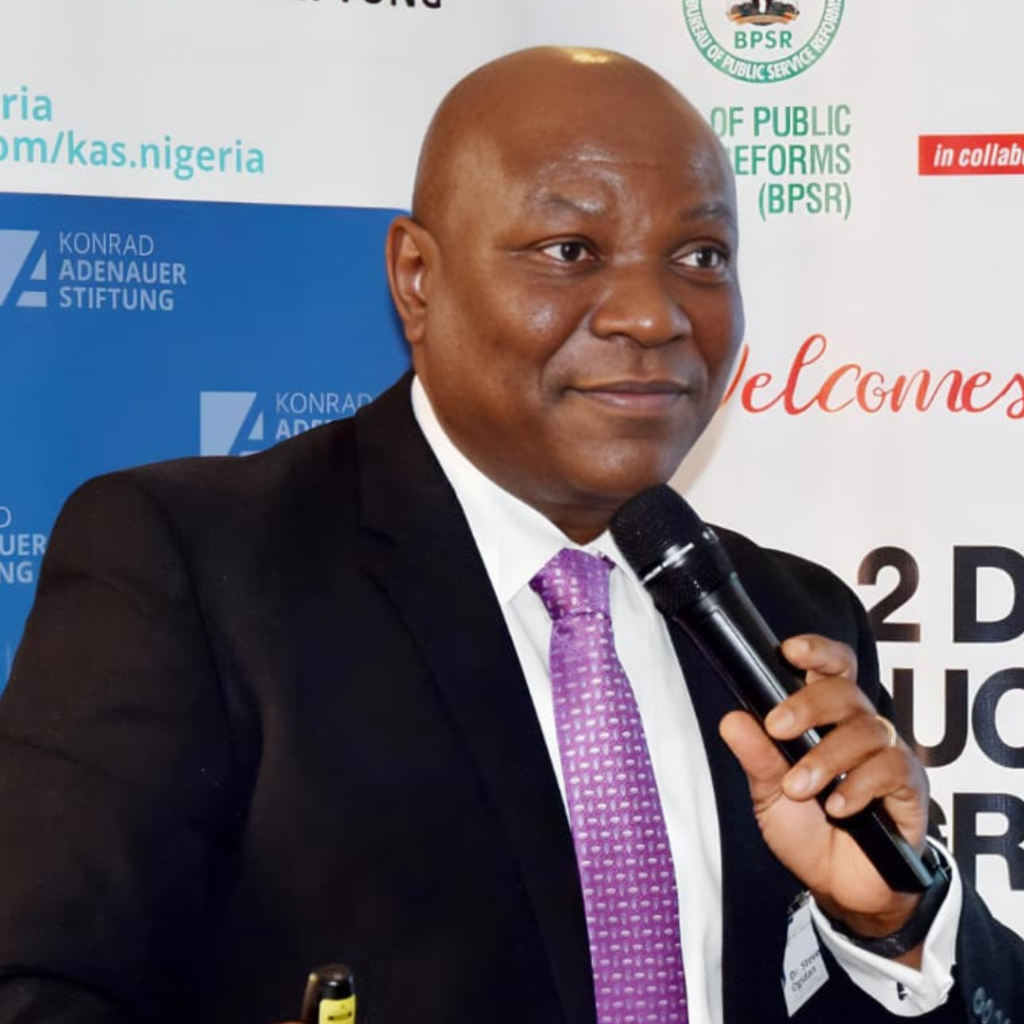
Dr. Steve Olusegun Ogidan is a development strategist, entrepreneur, and institutional capacity-building expert with over two decades of experience across Africa. As MD/CEO of Successory Nigeria Limited, he is dedicated to strengthening institutions, developing people, and driving sustainable growth.