Introduction
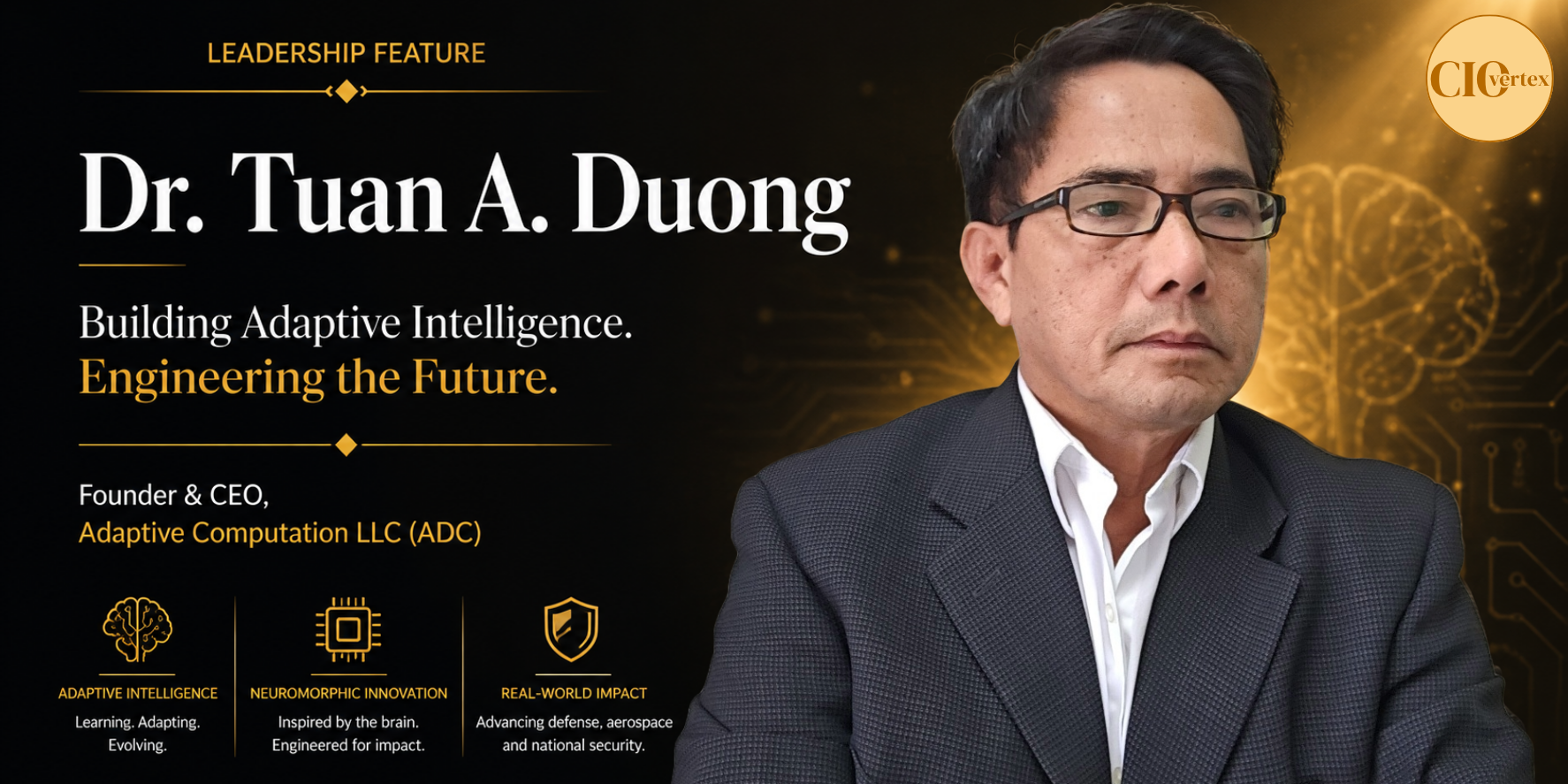
For more than three decades, Dr. Tuan A. Duong, Founder and CEO of Adaptive Computation LLC (ADC), has been exploring one of the most ambitious questions in modern technology: how can machines become capable of learning, adapting, and making intelligent decisions in real-world environments?
With a career spanning artificial intelligence, cognitive computing, neuromorphic engineering, sensor fusion, machine vision, autonomous systems, and ultra-low-power computing, Dr. Duong has built his professional journey around connecting neuroscience and engineering. His work is rooted in the belief that the next generation of intelligent systems will not simply process information, they will need to learn continuously, adapt to changing environments, and operate efficiently at the edge.
Today, through ADC, he is advancing biologically inspired building block functions along with neuroscience architecture and adaptive computing technologies for defense, aerospace, national security, and commercial applications.
The Beginning: A Research Journey at NASA JPL
Dr. Duong’s journey into advanced computing began in the summer of 1985, when he joined NASA’s Jet Propulsion Laboratory (JPL) as an intern working on neural computing systems.
At the time, neural computing represented an emerging frontier. Dr. Duong and his colleagues explored neural computers capable of simulating neuronal activity using John Hopfield’s associative memory model. The experience introduced him to an extraordinary research environment where conventional boundaries could be challenged and new possibilities explored.
He would ultimately spend 26 years at JPL, developing expertise across neural networks, neuromorphic hardware, machine vision, sensor fusion, electronic noses, autonomous systems, and ultra-low-power VLSI systems.
More importantly, those years established the philosophy that continues to influence his work today: meaningful technological breakthroughs often emerge when disciplines intersect and researchers are willing to look beyond established approaches.
From NASA Research to Adaptive Computation
During his years at JPL, Dr. Duong contributed to technologies supporting planetary exploration, intelligent sensing, autonomous systems, and advanced computing architectures. His research resulted in 30 NASA New Technology Reports, peer-reviewed publications, and patented innovations spanning hardware neural networks, adaptive learning algorithms, cognitive computing, and AI-enabled sensing.
After leaving JPL, he continued pursuing a central objective: bridging neuroscience, biology, and engineering to create intelligent systems capable of learning and adapting in real-world environments.
That vision ultimately led to the establishment of Adaptive Computation LLC.
At ADC, Dr. Duong leads the development of technologies designed to move beyond conventional AI architectures. The company focuses on adaptive learning, autonomous intelligence, cognitive computing, neuromorphic engineering, and low-SWaP (Size, Weight, and Power) edge AI systems.
His broader vision is to bring biologically inspired intelligence into next-generation autonomous platforms through the combined development of software and hardware.
Building Toward Self-Intelligent Systems
Among Dr. Duong’s most significant areas of research is his work toward creating a feedback loop between short-term and long-term memory, which he sees as a potential building block for more autonomous and self-intelligent systems.
On the software side, his research includes Extended Visual Pathway (EViP), an unsupervised learning approach inspired by the configuration of biological visual pathways, alongside Dynamic Supervised Learning, designed to continuously incorporate new information rather than relying exclusively on static training data.
EViP demonstrated strong capabilities in visual recognition and adaptive object tracking, including challenging conditions involving noisy, low-resolution, incomplete, or changing visual information. Its development contributed to the Online and Adaptive Image-based Search Engine in the Loop (OAISEE) approach, which received a DARPA ERIS Awardable in 2025.
Dynamic Supervised Learning addresses another important challenge in conventional machine learning: the fact that traditional supervised approaches often depend on fixed datasets, predefined architectures, and static labels. Dr. Duong’s approach is designed to accommodate evolving information, allowing new knowledge to build upon previously learned representations.
Together, these concepts represent his broader pursuit of machine intelligence that can continuously learn rather than simply execute predetermined instructions.
Where Software Meets Hardware
Dr. Duong’s vision extends beyond algorithms.
His ongoing hardware research includes a Modified Hybrid In-Memory Processing Architecture designed to improve tolerance to processing variations while supporting high-speed and low-power computation.
His work on Real-time Adaptive Tracking Systems for Irregular Target Moving Trajectory in SWaP-C Approach resulted in a DARPA ERIS Awardable in 2026, adding another important milestone to ADC’s technology-development journey.
He is also pursuing massive parallel learning mechanisms intended to significantly reduce learning time compared with conventional approaches, alongside compiler development designed to exploit parallel computation across ADC’s architecture.
For Dr. Duong, the ultimate objective is not simply to create better software or faster hardware independently. It is to bring the two together into an integrated foundation for increasingly capable intelligent systems.
Turning Research Into Real-World Technology
Building deep technology is only one part of the challenge.
As the leader of a technology-driven company, Dr. Duong recognizes that transforming research into commercially viable products requires persistence, resources, strategic planning, and the ability to navigate uncertainty.
ADC has taken a technology-first approach, using bootstrapped funding to develop foundational technologies and protect key innovations through patents before expanding into application-focused products.
The company is currently launching selected software and commercial-off-the-shelf-based products while preparing to pursue additional funding for its Hybrid Processing Unit (HPU), based on its hybrid in-memory processing architecture and compiler development.
For Dr. Duong, this approach provides greater control over technological development and market timing, even though it can require more patience than an application-first business model.
Finding the Right Environment for Breakthroughs
Because ADC’s work is heavily influenced by neuroscience and bio-inspired computing, Dr. Duong acknowledges that its technologies do not always follow mainstream technology directions.
That can make identifying the right customers, partners, and development environments particularly important.
His work with DARPA has provided a significant validation pathway. ADC completed Phase I and Phase II of the AIE DARPA IP2 program, with Dr. Duong serving as Principal Investigator, while receiving ERIS Awardables in both 2025 and 2026.
These milestones demonstrate how research rooted in unconventional technological concepts can progress toward practical applications when matched with the right opportunities and partners.
Passion as the Driving Force
Entrepreneurship in deep technology comes with substantial challenges, from product commercialization and funding to maintaining the resources required to keep a specialized team moving forward.
For Dr. Duong, passion remains one of the strongest sources of motivation.
He believes that passion must be supported by practical planning. A compelling technological vision alone is not enough; sustainable progress requires disciplined execution, careful resource management, and well-planned funding.
This combination of passion and planning allows ADC to remain focused, consistent, and willing to go the extra mile when challenges arise.
A Broader Definition of Success
For Dr. Duong, success is closely connected to the stage of technological development.
At the early stages, success may mean establishing a strong technological foundation, developing innovative architectures, and securing intellectual property. As technologies mature, success increasingly involves transitioning those innovations into products and real-world applications.
ADC’s current journey reflects this progression.
The company has focused on developing foundational technologies through bootstrapped resources and is now moving toward commercialization while preparing to scale its hardware ambitions.
For Dr. Duong, the objective is to build technology carefully and systematically, creating a foundation strong enough to support meaningful applications in the future.
Looking Ahead: The Future of Adaptive Intelligence
As artificial intelligence continues to evolve, Dr. Duong believes the next major advances will come from systems capable of adapting more naturally to changing environments.
His work reflects a long-term vision in which neuroscience-inspired principles, adaptive algorithms, advanced hardware architectures, and autonomous intelligence converge.
The future of AI, in his view, is not simply about making machines process more data.
It is about developing systems that can learn continuously, respond intelligently to new circumstances, operate efficiently under real-world constraints, and ultimately become more adaptive and autonomous.
Through Adaptive Computation LLC, Dr. Tuan A. Duong is working toward that future, one technological building block at a time.
Advice for the Next Generation of Technology Innovators
Dr. Duong’s advice for aspiring technology entrepreneurs is straightforward: deep technology requires passion, patience, and a strong technical foundation.
Building a technology company around foundational research can be slower than developing application-based products, but it also offers the opportunity to establish proprietary technologies step by step, control the development process, reduce dependence on market timing, and create a stronger foundation for future applications.
His journey demonstrates that meaningful innovation rarely happens overnight. It is built through decades of curiosity, experimentation, persistence, and the willingness to pursue difficult problems others may overlook.
For Dr. Tuan A. Duong, the pursuit continues: to transform insights inspired by biology and neuroscience into adaptive machines capable of bringing a new generation of autonomous intelligence into the real world.
Dr. Tuan A. Duong
Founder and CEO, Adaptive Computation LLC (ADC)
ABOUT DR. TUAN A. DUONG
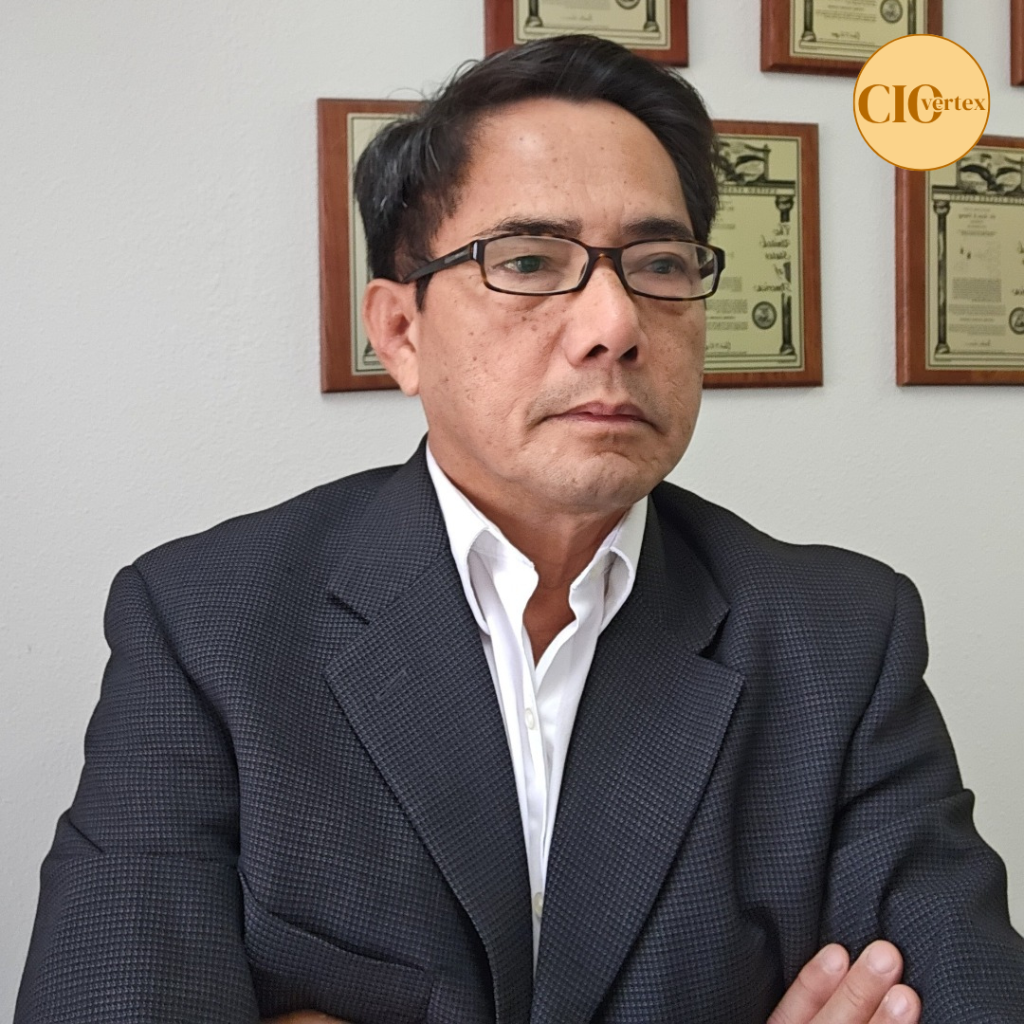
Dr. Tuan A. Duong is the Founder & CEO of Adaptive Computation LLC (ADC), with over three decades of experience in artificial intelligence, cognitive computing, neuromorphic engineering, and autonomous systems. His work focuses on inspired technologies that enable machines to learn and operate intelligently in real-world environments.