Pinnacle Leaders

stefan cover page
Pinnacle Leaders

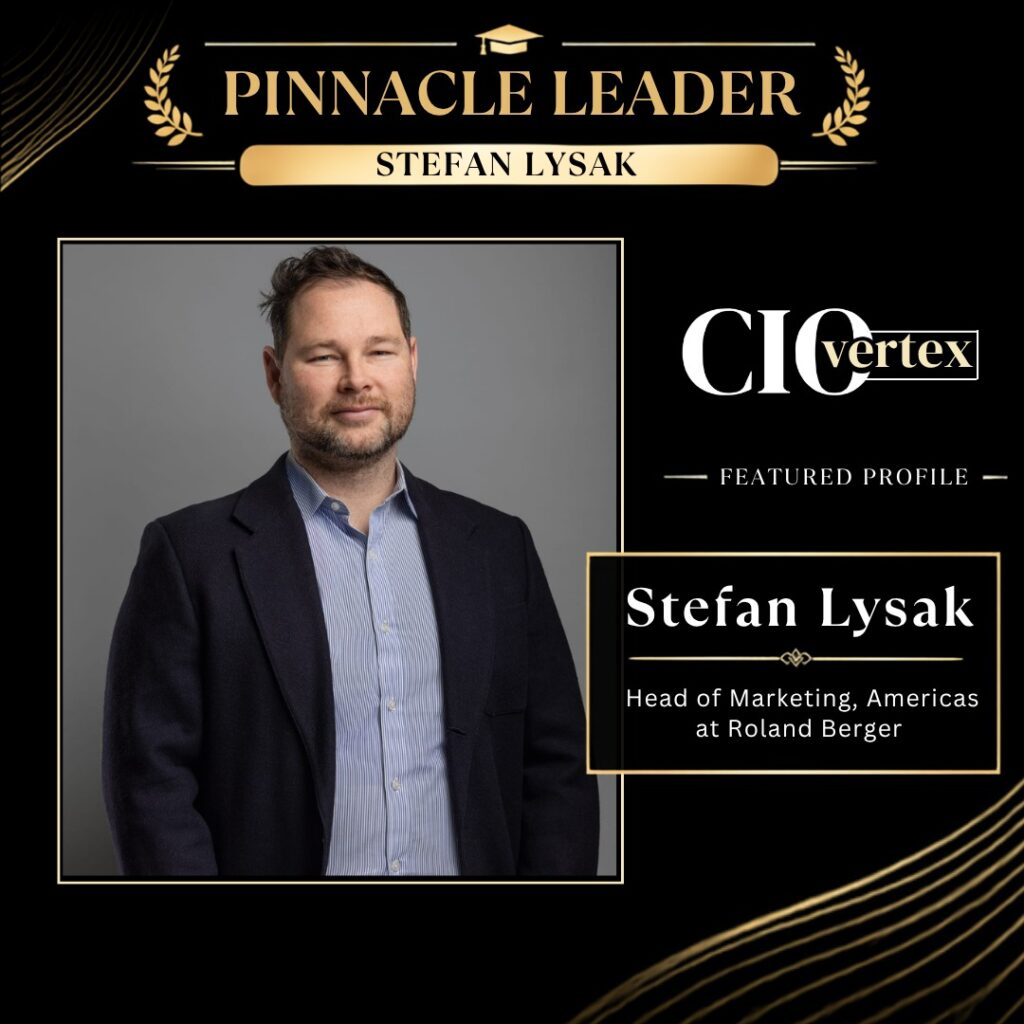
Stefan Lysak

Stefan Lysak: Making Marketing Matter to the Business – The Roland Berger marketing leader on turning strategy, creativity, and people into meaningful business impact Introduction Marketing has changed dramatically. Customer expectations move faster, technology continues to reshape the way companies compete, and artificial intelligence is challenging long-standing assumptions about how businesses communicate and grow. For Stefan Lysak, Head of Marketing, Americas at Roland Berger, that evolution makes marketing more interesting, not less. He has always been drawn to the intersection of business, creativity, and people. But over the course of his career, his understanding of marketing has evolved from seeing it as a function that supports the business to recognizing its potential to actively shape where the business goes next. For Stefan, that is where the real value of marketing begins. From Creativity to Commercial Impact Stefan’s attraction to marketing came naturally. It gave him a way to combine his interest in business and creativity with his fascination with people—to take complex ideas, make them relevant, and ultimately turn attention into something that creates value. A pivotal shift came when he moved closer to the commercial side of the business. It changed the way he looked at his profession. Marketing was not simply about campaigns, communications, or making things look good. At its best, it could influence strategic decisions, bring the voice of the market into the organization, build trust, create demand, and contribute directly to growth. That perspective has stayed with him. Give Him a Messy Problem Today, one of the questions Stefan cares most about is not whether marketing is busy, but whether marketing matters. His job, in his view, is not to keep a marketing team occupied with activity. It is to make sure the function is helping the business move forward. If there is one thing that seems particularly characteristic of Stefan’s leadership style, it is his appetite for complexity. “I like messy problems. Give me an ambitious goal, a complicated challenge, and smart people in the room, and that’s usually where I have the most fun.” It is a mindset that says a great deal about how he works. Rather than looking for perfectly defined problems with obvious answers, Stefan enjoys situations where the path forward needs to be figured out. Complexity creates room for better questions, stronger collaboration, and more creative solutions. As Head of Marketing, Americas at Roland Berger, he operates at precisely that intersection where brand, growth, technology, talent, and business strategy continuously influence one another. And because the environment never stands still, neither does his approach. When Marketing Earns Its Seat at the Table For Stefan, one of the clearest signs of a successful marketing organization is when business leaders want marketing involved before a decision is made. Not after the strategy has been finalized. Not when it is time to communicate it. Earlier. He considers it a meaningful achievement when colleagues turn to marketing and say, in effect: Bring marketing into this conversation early. We need them at the table. That moment represents a shift in perception. Marketing is no longer simply executing someone else’s strategy. It is helping shape the strategy itself. This is the leadership perspective Stefan believes modern marketing executives need to embrace. The question is not simply, “What should we communicate?” It is: “Where does the business need to go, and how can marketing help get it there?” Building Teams That Build Together That distinction can fundamentally change the role marketing plays inside an organization. Stefan’s approach to leadership is closely connected to his belief in people. He enjoys working with smart, ambitious individuals and creating environments where different perspectives can come together around difficult problems. For him, great teams are not built by finding people who think alike. They are built by bringing together people who can challenge one another, contribute different strengths, and remain focused on a shared objective. That philosophy has roots in an earlier chapter of his life. Lessons from the Football Field Before leading marketing organizations, Stefan experienced leadership through soccer. Having played professionally when he was younger and later spending years coaching, he learned lessons that continue to influence his professional life. Talent matters, but talent alone does not win. Trust matters. Preparation matters. Resilience matters. So does the ability to remain composed when circumstances do not go according to plan. Those lessons translate naturally into business. Successful teams whether on a football field or inside an organization need people who understand their role, trust the people around them, and remain committed to something larger than individual achievement. For Stefan, leadership is therefore as much about creating the conditions for others to succeed as it is about setting the direction. Staying Curious When Everything Changes The pace of change in marketing makes curiosity essential. AI, data, new communication channels, and evolving customer behavior are reshaping the profession quickly. What worked yesterday may not necessarily work tomorrow. Building Teams That Build Together Stefan’s approach to leadership is closely connected to his belief in people. He enjoys working with smart, ambitious individuals and creating environments where different perspectives can come together around difficult problems. For him, great teams are not built by finding people who think alike. They are built by bringing together people who can challenge one another, contribute different strengths, and remain focused on a shared objective. Lessons from the Football Field Before leading marketing organizations, Stefan experienced leadership through soccer. Having played professionally when he was younger and later spending years coaching, he learned lessons that continue to influence his professional life. Talent matters, but talent alone does not win. Trust matters. Preparation matters. Resilience matters. So does the ability to remain composed when circumstances do not go according to plan. Those lessons translate naturally into business. Successful teams whether on a football field or inside an organization need people who understand their role, trust the people around them, and remain committed to something larger than individual achievement. For Stefan, leadership is therefore as much about creating the
rfyah cover page
Pinnacle Leaders

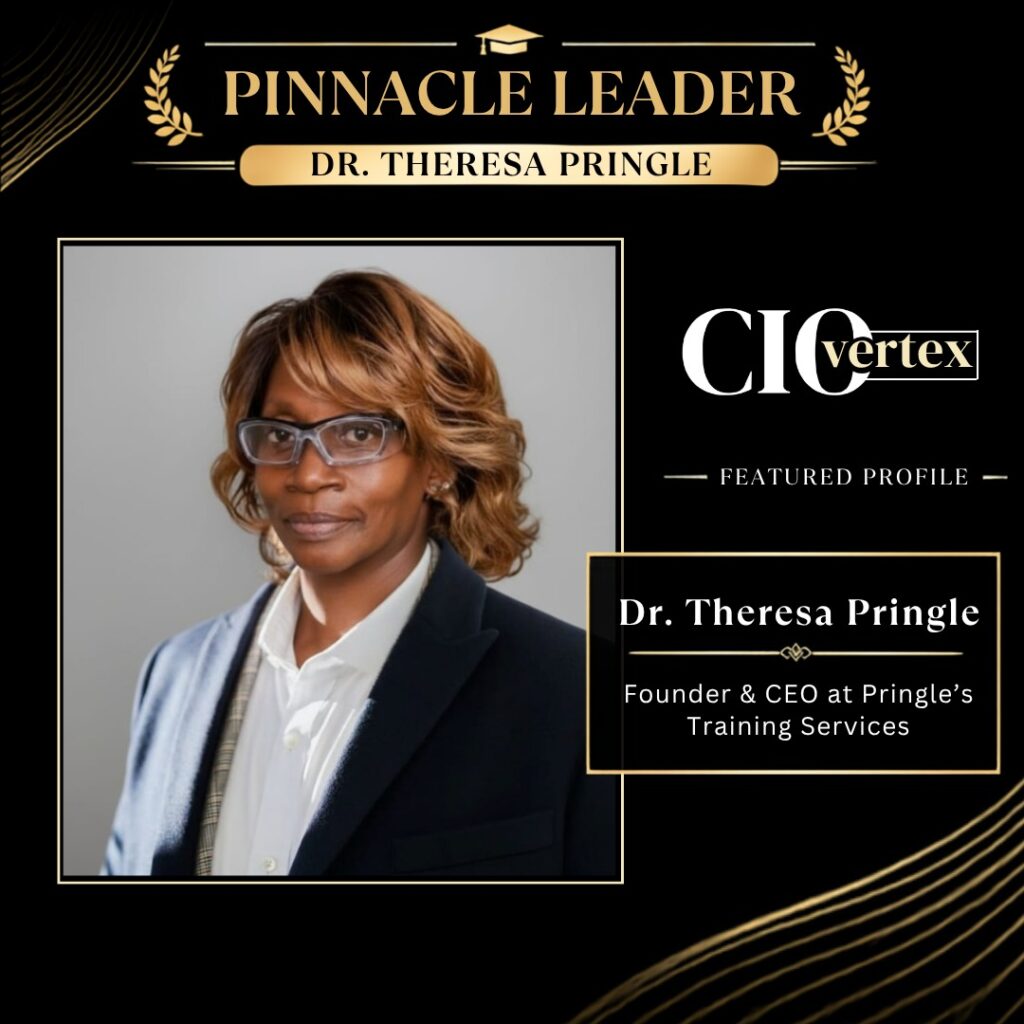
Dr. Rfah Hadi Alyami

Dr. Rfah Hadi Alyami: Following the Question Across Education, Research, and AI Founder of Conferencely.org | Educational Research Specialist, (NIEPD) Introduction From the classroom to educational policy, advanced data science, artificial intelligence, and entrepreneurship, Dr. Rfah Hadi Alyami has built a career around one enduring question: how does knowledge become meaningful change? The most interesting careers are not always the ones that follow a straight line. Sometimes, the strongest professional journeys are built by following a question rather than a title. For Dr. Rfah Hadi Alyami, that question began in a science classroom. As a teacher, she quickly discovered that students were rarely satisfied with simply learning what the curriculum required. Their questions went further. They wanted to understand why the sky behaved as it did, how knowledge was established, and what existed beyond the boundaries of what they were being taught. That curiosity revealed something that would influence her entire career: there can be a significant gap between what a system is designed to deliver and what people actually need from it. Rather than accepting that gap, Alyami began following it. Her journey would take her from science teaching into school leadership, higher education, educational research, professional development, and policy including strategic work with Saudi Arabia’s Ministry of Education on the establishment and strategic planning of the Secondary School Pathways Project. Today, she works at the intersection of educational research, policy, data science, artificial intelligence, and entrepreneurship. On the surface, those may appear to be separate disciplines. For Alyami, they are not. They are different ways of asking the same question: How can knowledge become meaningful change? From the Classroom to the System Alyami’s understanding of education began from the inside. As a science teacher, she experienced firsthand the difference between teaching information and helping someone genuinely understand. Moving into school leadership expanded that perspective. She began seeing talented educators constrained by decisions made elsewhere decisions they had little influence over but were nevertheless expected to implement. That experience changed the direction of her career. If meaningful improvement was going to happen, she realized, it was not enough to understand the classroom. Someone also needed to understand the structures surrounding it. So she kept moving upward through the system. School leadership led toward higher education, research, professional development, and eventually educational policy. Each step provided another layer of understanding: what happens in a classroom, what leaders experience, how reforms are designed, and what happens when those reforms meet the realities of institutions and people. Her strategic work with Saudi Arabia’s Ministry of Education on the Secondary School Pathways Project became part of that broader journey. The objective was no longer simply to improve one classroom or one school. It was to understand education at the level where decisions shape entire systems. The Turning Point: Understanding Why Reform Succeeds —or Fails If Alyami’s career were a book, she identifies her doctorate at the University of Reading as its pivotal chapter. Her doctoral research examined the Tatweer School System in Saudi Arabia, focusing on educational reform through the experiences of the leaders and teachers responsible for living inside that reform. The research led to a conclusion that would profoundly influence how she approached education thereafter. The design of a reform, she found, tells only part of the story. Its outcomes depend heavily on the environment into which it is introduced the people, incentives, culture, capacity, leadership, and institutional conditions surrounding implementation. That distinction is critical. A policy can be intellectually sound and still fail to create the intended outcome if the environment is not prepared to carry it. For Alyami, research therefore became more than an academic exercise. It became a way of understanding the distance between an idea and its real-world consequences. That insight continues to influence the way she approaches professional challenges today. Four Disciplines, One Question Alyami’s current chapter represents a convergence of the different paths she has followed. She works as an Educational Research Specialist at the National Institute for Educational Professional Development (NIEPD) while pursuing a master’s degree in Advanced Data Science and Artificial Intelligence at the University of Liverpool. Her dissertation takes that intersection even further: she is developing an Explainable AI research sandbox for educational decision-making. At the same time, she founded Conferencely.org, a platform focused on indexing the global conference ecosystem. Researcher. Policy professional. Technologist. Founder. These identities might appear disconnected at first glance. Alyami sees them differently. They are not four separate careers, but four instruments exploring the same underlying question: how does knowledge become meaningful change? That convergence has become one of the defining characteristics of her professional identity. Building AI That Can Be Questioned Among Alyami’s most meaningful achievements is the Explainable AI research sandbox she developed for educational decision-making. Rather than simply writing about the risks associated with opaque algorithms, she chose to build a working system. The project incorporates a machine-learning model with SHAP-based explanations, an API, and a dashboard, allowing researchers and decision-makers to interrogate why a model reached a particular conclusion rather than simply accepting its output. For Alyami, the importance of the project is not limited to its technical architecture. It represents the value of bringing domain knowledge into technological development. Someone with two decades of experience across classrooms, school leadership, research, and policy brings a different understanding of where explanation matters most. A data scientist may be able to build a sophisticated model. But understanding what a particular decision means for a teacher, a student, or an educational institution requires familiarity with the human system surrounding the technology. That is where Alyami believes interdisciplinary thinking becomes powerful. Her educational background was not something she had to overcome to enter AI. It was precisely what made the AI project worth building. Technology with Accountability Alyami’s interest in artificial intelligence is therefore less about automation for its own sake and more about the quality of decisions technology can support. In education, that distinction matters. When an AI-enabled system influences which students receive support or contributes

Dr. Theresa Pringle Cover Page
Pinnacle Leaders

Dr. Theresa Pringle

From Lived Experience to Lasting Change: Dr. Theresa Pringle’s Mission to Transform Mindsets and Systems Introduction Some leaders build their careers by studying problems from a distance. Dr. Theresa Pringle built hers by living through them. Her journey into advocacy and community transformation was shaped by personal experiences with different degrees of homelessness, adversity, and the systemic barriers that often make resilience and stability difficult to achieve. Rather than allowing those experiences to define her limitations, she transformed them into a deeper understanding of the gaps within housing stability has a direct impact on health education employment as well as social services, and community support systems. That lived perspective became the foundation for a career dedicated to making those systems more accessible, practical, and human-centered. Today, Dr. Pringle serves as Founder & President of Pringle’s Pit Stop and Founder & CEO of Pringle’s Training Services, bringing together direct community service, education, advocacy, and professional development under one guiding philosophy: “Make It Make Sense. Change The Mindset, Change The Outcome.” Her work is ultimately driven by a simple but powerful belief: people should not have to navigate difficult systems alone. A Leader Who Goes Where the Need Is What distinguishes Dr. Pringle’s approach is that she has never been interested in leading solely from behind a desk. Known affectionately in her communities as “Ma Dukes” and “OG,” she takes a boots-on-the-ground moving with focus and direction approach to service. Whether she is working with individuals experiencing homelessness, supporting families navigating instability, mentoring frontline professionals, or speaking to organizations about systemic change, she brings the same combination of compassion, practical knowledge, and accountability. Through Pringle’s Pit Stop, established in 2019 Pringles Training Services formerly known as Pringles Consulting and Training established 2019, as well as Pringles cleaning Solutions in 2020 it’s focuses on employment readiness and Workforce transition she has developed services designed not only to help individuals and families get back on their feet, but to remain on their feet and expanding their personal growth as well. Her work encompasses community case management, daily living skills, housing stability, homelessness prevention, transitional support, and connections to broader community resources that empower individuals and families so that they can have options. Making Complex Systems Understandable One of the most significant contributions Dr. Pringle brings to the human services sector is her ability to turn complicated processes into practical, understandable pathways. Through her training initiatives, she works with nonprofit organizations, community groups, faith-based institutions, housing providers, government agencies, and corporate teams to strengthen the way they communicate, respond to challenges, and engage the people they serve. Her training philosophy is deliberately experiential. Rather than relying exclusively on conventional lectures, she incorporates interactive exercises, real-world scenarios, simulations, coaching, and reflective conversations that encourage participants to understand not only what needs to change, but why it needs to change. Her trademarked philosophy, “Make It Make Sense. Change The Mindset, Change The Outcome,” sits at the center of this methodology. For Dr. Pringle, meaningful change begins with the way people think about a problem. When organizations move from judgment to understanding, from reactive responses to proactive options, and from perfectionism to continuous improvement, better outcomes become possible. From Homelessness Advocacy to Workforce Opportunity Her commitment to creating practical pathways extends beyond direct social services. Through Pringle’s Cleaning Services, Dr. Pringle developed a social enterprise model that creates employment opportunities for people experiencing homelessness, those residing in shelters, and individuals returning to the workforce after incarceration. Understanding Homelessness as a Systemic Challenge At the heart of this work is her understanding that homelessness is rarely just a housing issue. It can intersects and impacts employment, education, healthcare, and access to essential services. For example, many would take for granted that anyone in need to be able to get services from Social service agency service providers however the foundational documents needed to initiate services and or resources not necessarily limited to financial but employment training healthcare are predicated on having a State motor vehicle driver’s license/personal ID, birth certificate and Social Security card and those with minor children should have the same for every person in their household under the age of 18 including School documentation that the child is in school which can be problematic as that we’re seeing an uprise in schools not being accountable for providing continual education for those that are unhoused or sheltered in a more timely fashion. Addressing one barrier while leaving the others untouched often creates another cycle of instability. Dr. Pringle therefore focuses on the whole person rather than simply the immediate crisis. Education as a Catalyst for Transformation Dr. Pringle’s work also demonstrates her belief that education can change the trajectory of a person’s life. Her involvement with St. Vincent College created an opportunity for individuals connected with Pringle’s Pit Stop to explore higher education beyond the urban environments they may have known. Through guidance, gap assistance, care packages, community case management and continued support, her middle son was vital in springboarding those who wanted to make the college experience more accessible to individuals who might otherwise never have considered that path. This commitment reflects her broader understanding of service: sometimes the most transformative intervention is simply opening a door and helping someone believe they are capable of walking through it. Her own academic and professional development has similarly been multidisciplinary, encompassing psychology, gerontology, reentry services, crisis intervention, conflict resolution, trauma-informed care, peer recovery support, mediation, and person￾centered planning. That breadth allows her to approach community challenges through multiple lenses rather than relying on a single solution. Building Proactive Options Instead of Reactive Responses Across her work, one theme repeatedly emerges: Proactive Options Over Reactive Responses are more effective that other methods. Dr. Pringle believes organizations should not wait until a crisis becomes overwhelming before determining how to respond. Instead, policies, training programs, and community resources should be designed with the realities of people’s lives in mind from the beginning. It is imperative that is community that sits in

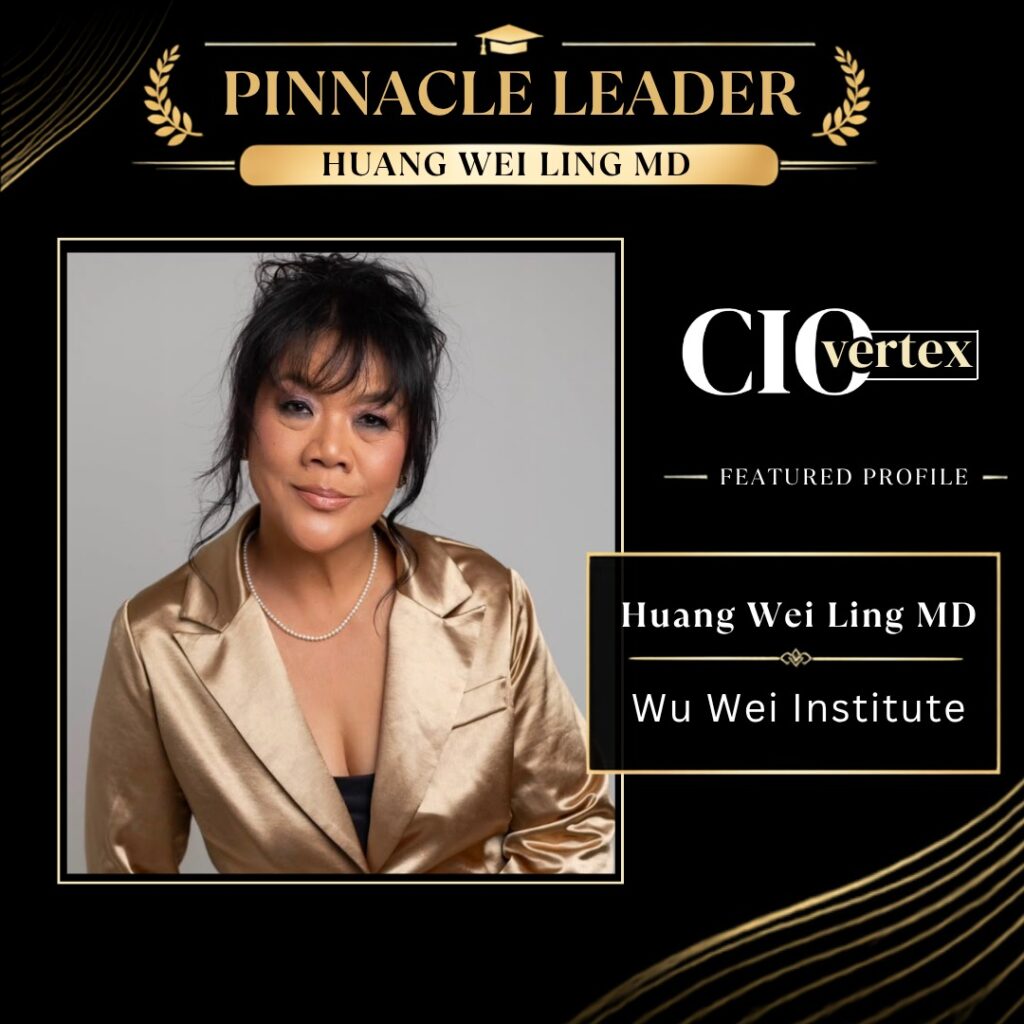
huang cover banner
Pinnacle Leaders

Dr. Huang Wei Ling

Dr. Huang Wei Ling: Bridging Eastern Wisdom and Western Medicine Through a Root-Cause Approach to Healing Introduction For Dr. Huang Wei Ling, medicine has never been limited to treating symptoms. Born in Taiwan and raised in Brazil from the age of one and a half, her journey has been shaped by the intersection of Eastern traditions and Western medical education. After graduating from the State University of Londrina in Brazil, Dr. Huang specialized in infectious and parasitic diseases and established her medical practice in the countryside of São Paulo, where she continues to live and work today. Over more than three decades, her professional journey has expanded across Western medicine, Traditional Chinese Medicine, acupuncture, Chinese herbal medicine, Chinese diet therapy, homeopathy, nutrition, and pain management. At the center of this journey is a question that has continued to shape her work: Can medicine go beyond treating symptoms and address the deeper imbalances that may contribute to illness? Through the Wu Wei Institute, Dr. Huang is developing and promoting an integrative approach that seeks to bring together principles from different medical traditions into a unified therapeutic framework. The Spark: A Mother’s Wisdom and the Search for Deeper Healing The person who had the greatest influence on Dr. Huang’s medical evolution was her mother. Although she was not a medical professional, Dr. Huang’s mother encouraged her to explore Traditional Chinese Medicine (TCM), believing that it could become increasingly important to the future of healthcare. That advice changed the direction of Dr. Huang’s career. Beginning in 1996, she pursued extensive studies in acupuncture, Chinese herbal medicine, and Chinese diet therapy while continuing to build upon her Western medical background. Her training also included parenteral and enteral nutrition, general medicine, and pain management. Rather than treating these disciplines as isolated systems, she began searching for common principles that could connect them. Her interest increasingly centered on what Traditional Chinese Medicine describes as the body’s energetic balance and how that balance may relate to physical health. Dr. Huang believes that modern life has introduced new environmental and technological influences that deserve greater scientific and medical investigation. She argues that factors associated with contemporary lifestyles including exposure to increasingly complex technological environments, should be studied more deeply in relation to human health. This perspective led her toward a broader understanding of medicine: one that, in her view, considers both the measurable physical body and less tangible aspects of human physiology and wellbeing. From Conventional Medicine to an Integrative Philosophy Dr. Huang is careful to emphasize that she is not opposed to modern medicine. Her objective is instead to expand the conversation around how illness is understood and treated. Her experience as an infectious-disease specialist provided her with a strong foundation in conventional medical science. At the same time, her subsequent studies in TCM and other therapeutic traditions encouraged her to question whether focusing exclusively on symptoms always provides the complete picture. In 2015, she presented her work at an acupuncture research conference at Harvard, discussing her perspective that addressing underlying energetic imbalances could potentially influence multiple health concerns simultaneously. Over time, this philosophy became the foundation for what she describes as a new model of treatment, one intended to combine selected principles from different medical traditions while adapting them to what she believes are the changing needs of today’s patients. Her approach emphasizes highly diluted preparations and the treatment of what she considers the underlying energetic terrain rather than focusing exclusively on individual symptoms. The Patient Who Changed Her Perspective A pivotal moment in Dr. Huang’s career occurred in 2006 with a 70-year-old patient experiencing persistent leg pain. After six months of conventional anti-inflammatory treatment without sufficient improvement, Dr. Huang chose to approach the case through acupuncture and dietary changes based on the patient’s perceived energetic imbalances. Following approximately ten acupuncture sessions, the patient reported that his leg pain had improved. He also revealed that he had been living with glaucoma for more than four decades. According to Dr. Huang, his intraocular pressure, which had historically remained above 40 mmHg, had fallen to approximately 17 mmHg. The unexpected outcome profoundly influenced her thinking. Rather than viewing the result simply as an isolated clinical event, Dr. Huang saw it as an invitation to investigate whether treating broader systemic patterns could influence conditions beyond the symptoms originally presented by a patient. The experience became an important turning point in her decision to share her ideas internationally. Since then, she reports having participated in more than 500 international conferences and traveled to nearly 50 countries, presenting her perspective on integrative approaches to medicine. Developing a New Theory of Treatment In 2015, while beginning postgraduate studies in homeopathy, Dr. Huang developed a thesis that sought to connect homeopathic principles with the root-cause reasoning of Traditional Chinese Medicine. Her broader theory attempts to draw from multiple medical traditions, including Western medicine, Traditional Chinese Medicine, Ayurveda, and homeopathy. Rather than placing the approach entirely within one established therapeutic category, she describes it as a distinct framework designed around the concept of addressing underlying energetic imbalances. According to Dr. Huang, the body can be understood as an interconnected system in which different organs and energy pathways influence one another. She uses the analogy of an interconnected network to explain how changes in one part of the system may potentially affect other areas. Her objective is to develop a treatment philosophy that combines different schools of thought while selecting what she considers appropriate approaches for contemporary patients. At the same time, she recognizes that such ideas require further scientific investigation. For broader acceptance within the scientific community, she believes that additional research and published studies are necessary to explain the mechanisms underlying the therapies she advocates. Beyond Symptoms: Exploring the Underlying Terrain Dr. Huang’s experience with infectious diseases also influenced her approach to treatment. After specializing in infectious diseases, she began exploring whether certain common infections could be addressed by changing what she calls the “terrain” in which the infection develops. Her work

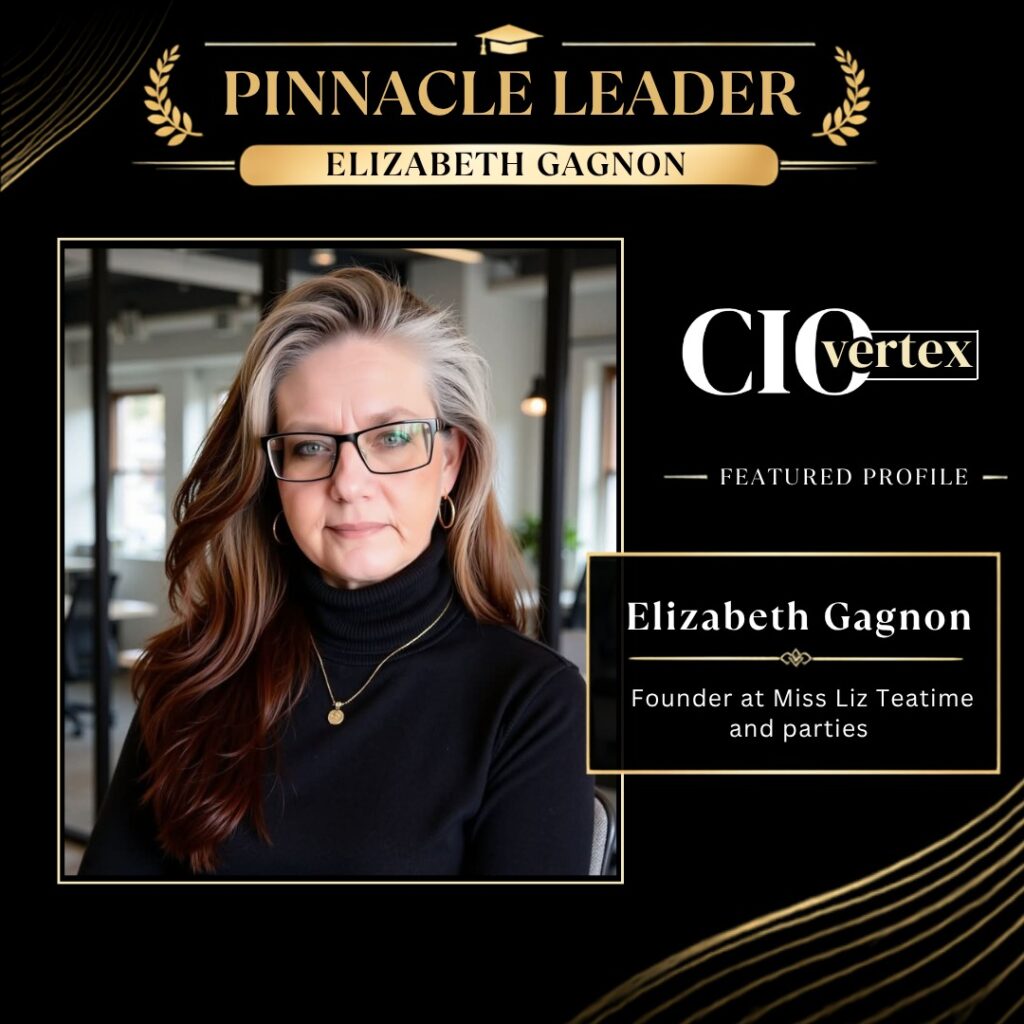
Elizabeth front cover
Pinnacle Leaders

Elizabeth Gagnon

Elizabeth Gagnon: Turning Stories of Survival into a Legacy of Connection From Finding Her Voice to Creating a Global Table Introduction For Elizabeth Gagnon, the path to purpose was never defined by a perfect career plan. It was shaped by lived experience, adversity, and the realization that silence can become its own kind of prison. Through experiences of grief, abuse, loss, and personal struggle, Elizabeth learned to transform what she had carried quietly into words and eventually, into a platform that could help others find their own voices. Writing became one of the first ways she gave language to experiences that had once been difficult to express. From there came advocacy, speaking, mentoring, storytelling, and ultimately the creation of Miss Lizs Tea Parties and Teatime with Miss Liz. What began as the sharing of one personal story gradually became something much larger: a space where other people could share theirs. Elizabeth discovered that when one person finds the courage to speak, it can give someone else permission to do the same. That realization became the foundation of her work and continues to influence the way she approaches every conversation, every guest, and every opportunity to connect people through meaningful storytelling. Her philosophy is simple yet powerful: a story does not have to end where the pain began. From Survival to Transformation Today, Elizabeth describes the current chapter of her journey as “Transformation into Legacy.” For years, her work centered on turning survival into purpose. Now, her focus has expanded toward what that purpose can leave behind. One of the most significant shifts in her life came when she stopped asking, “Why did all of this happen to me?” and began asking, “What can I create from what I have learned?” That change in perspective became a turning point. Her experiences became books. Her voice became advocacy. Conversations became Teatime with Miss Liz. Guests became connections, and individual stories became resources capable of reaching people she may never personally meet. This evolution reflects a deeper understanding of impact. Elizabeth is no longer focused solely on what she can accomplish herself; she is thinking about the conversations, teachings, resources, and opportunities she can create that may continue helping others long after a particular conversation has ended. For her, that is the essence of transformation turning personal experiences into something that can serve a greater purpose. Building a Table Where Every Voice Matters Among Elizabeth’s greatest achievements is not a particular award, title, interview, or number of appearances. It is the table she has built—a table where people feel that their voices matter. Through Teatime with Miss Liz, she has welcomed people from different countries, professions, cultures, and walks of life. Authors, advocates, survivors, entrepreneurs, educators, artists, leaders, and everyday individuals carrying extraordinary stories have all found a place at that table. And everyone brings their own T-E-A. For Elizabeth, the concept extends far beyond a traditional tea gathering. It represents teaching, education, awareness, experiences, and wisdom—the things people bring into one another’s lives and the elements that allow meaningful conversations to create lasting impact. The greatest reward comes when a guest or audience member shares that a conversation helped them see something differently, discover an important resource, find encouragement, pursue a dream, or simply feel less alone. That, Elizabeth believes, is impact. And impact will always mean more to her than applause. Purpose as the Fuel to Keep Showing Up Like any meaningful professional journey, Elizabeth’s path has included exhaustion, disappointment, rejection, uncertainty, and moments when she has questioned whether her work is truly reaching people. Yet purpose continues to move her forward. Sometimes, all it takes is one message from someone saying, “I needed that conversation.” A single person discovering a guest whose story resonates with their own experience, finding a book or organization they did not know existed, or simply receiving a moment of encouragement can reaffirm the value of the work. Elizabeth also understands that the impact of a person’s work is not always immediately visible. Some seeds are planted without the person who planted them ever seeing exactly how they grow. That perspective allows her to continue showing up with integrity. Because somewhere, she believes, there may be someone who needs the very conversation being created today. Redefining What Success Really Means Elizabeth’s definition of success has evolved significantly over time. Earlier in her journey, success was more closely associated with recognition, accomplishments, titles, numbers, and proving that she could overcome everything life had placed in her path. Today, success is quieter and more meaningful. For Elizabeth, success is peace. It is being able to look at herself and know that she remained authentic. It is having boundaries, knowing when to speak and when to listen, continuing to learn, and being present for the people she loves while still honoring the work she feels called to do. She no longer believes success requires being known by everyone. Instead, it is about making a meaningful difference to the people one actually reaches. If one person walks away from her table believing that their voice has value, then something successful has happened. Beyond the Microphone: The Human Connection Behind the Work From the outside, Elizabeth’s work can appear to be about microphones, interviews, books, social media, guests, graphics, and public appearances. But beneath all of that lies something much more intentional. It is about listening. It requires research, preparation, trust, emotional awareness, sensitivity, and respect for different perspectives. More importantly, it requires recognizing that a guest may be sharing a deeply personal part of their life one that may have taken tremendous courage to discuss publicly. Elizabeth does not want people to come to her table simply to perform. She wants them to have real conversations. That distinction is at the heart of Teatime with Miss Liz. The tea itself is not the central focus. The real value lies in what people bring into the conversation and what they take away from it. The microphone is simply the tool.

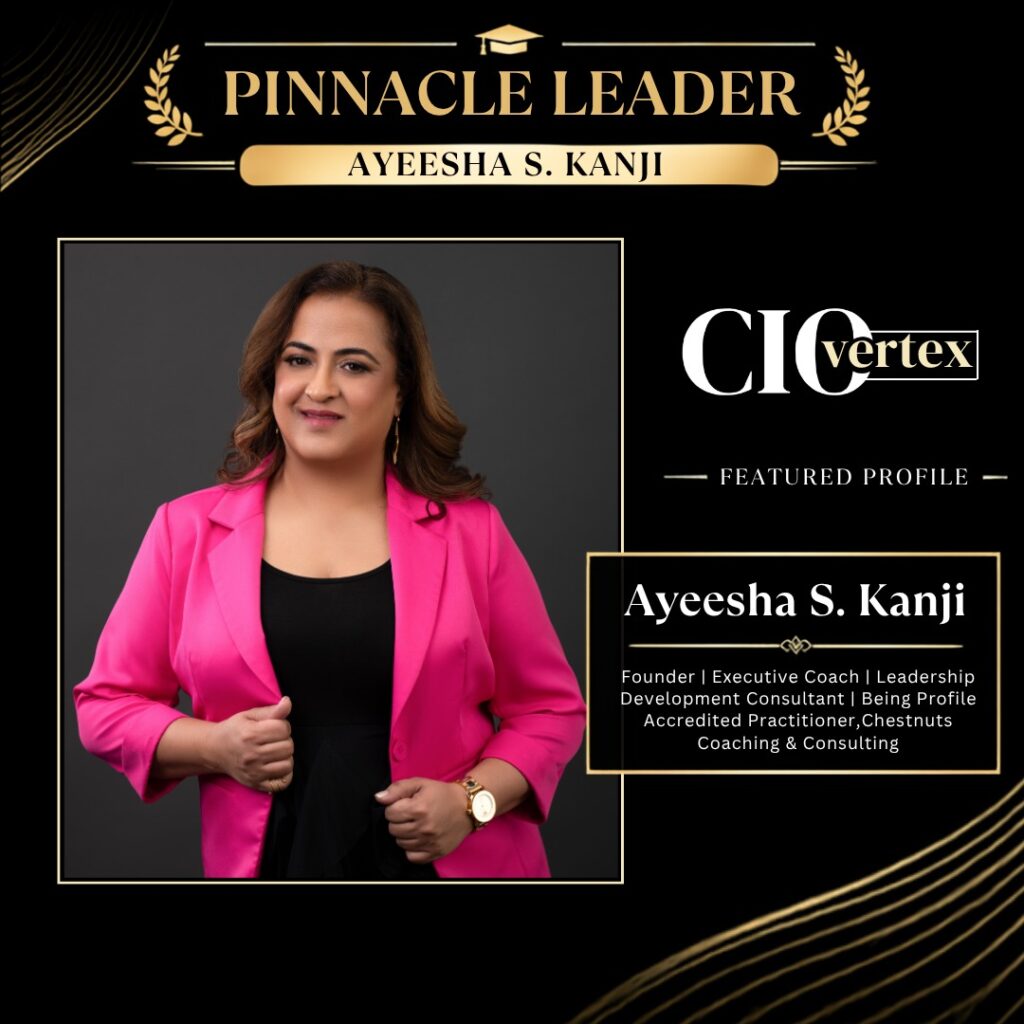
ayess pl feature
Pinnacle Leaders

Ayeesha S. Kanji

Ayeesha S. Kanji: Transforming Potential into Purposeful Leadership Founder | Executive Coach | Leadership Development Consultant Chestnuts Coaching & Consulting Introduction Leadership is often associated with titles, authority, and decision-making power. For Ayeesha S. Kanji, however, leadership begins much earlier, with self-awareness, curiosity, and the willingness to grow. As the Founder of Chestnuts Coaching & Consulting, Ayeesha works with individuals, leaders, and organizations to develop stronger leadership capabilities, navigate change, and create meaningful professional impact. Drawing on her experience across human resources, learning and development, leadership development, and coaching, she has built her practice around a simple but powerful belief: people often possess considerably more potential than they realize. Her role is to help them recognize it. Where Potential Meets Purpose Ayeesha’s passion for coaching and leadership development grew from years of observing people in professional environments. Again and again, she saw capable individuals struggle to recognize their own strengths or translate their potential into confident action. Those observations shaped a deeper conviction: meaningful transformation starts from within. Throughout her career, Ayeesha witnessed how self-awareness could influence far more than professional performance. It could transform confidence, relationships, communication, decision-making, and ultimately organizational culture. That realization became the foundation of her work. Today, every coaching conversation, leadership program, and consulting engagement is guided by the same purpose to help people understand themselves more deeply, unlock their strengths, navigate challenges with greater clarity, and lead in a way that feels authentic to who they are. A Career Built Around Human Development Ayeesha’s professional journey has brought together several complementary disciplines, including human resources, learning and development, leadership development, organizational development, and coaching. Rather than viewing these experiences as separate chapters, she sees them as pieces of the same story. Each role gave her a different perspective on what enables individuals and organizations to thrive. Her experience in HR provided insight into people and workplace dynamics. Learning and development strengthened her understanding of how individuals acquire new capabilities. Leadership development showed her how self-awareness and influence shape organizational outcomes. Coaching ultimately gave her the opportunity to bring these lessons together in a highly personalized way. Today, she finds herself in what she describes as a chapter where experience, purpose, and impact come together. The establishment of Chestnuts Coaching & Consulting represented a pivotal step in that evolution. It created a platform through which Ayeesha could combine her professional experience with her passion for helping people grow. Her journey has continued to expand internationally, strengthened by becoming a Being Profile Accredited Practitioner and through her contribution as a featured author in an upcoming international anthology. These milestones reflect an ongoing commitment to learning, evidence-based practice, and thought leadership. Coaching Beyond Advice One of the biggest misconceptions about coaching, according to Ayeesha, is that a coach simply tells people what to do. For her, effective coaching is almost the opposite. Rather than providing a predetermined set of answers, coaching creates a space where individuals can discover their own insights. Through thoughtful questioning, reflection, self-awareness, and constructive challenge, clients are encouraged to examine their assumptions, recognize limiting beliefs, and develop strategies that are meaningful and sustainable. This approach places ownership where it belongs with the individual. Ayeesha also believes that leadership development should not be reserved for people occupying executive offices. Leadership begins long before someone receives a formal title. The ability to communicate effectively, influence positively, take responsibility, understand others, and make thoughtful decisions are leadership qualities that can be developed at every stage of a career. That inclusive perspective is central to her practice. The Science of Self-Awareness As a Being Profile Accredited Practitioner, Ayeesha incorporates the Being Profile Assessment as an Awareness Tool into her coaching and consulting work. The Being Profile provides another lens through which individuals and teams can explore communication styles, leadership preferences, behavioral tendencies, and team dynamics. By increasing awareness of how people naturally operate and interact, such insights can become a starting point for more intentional leadership. For Ayeesha, assessment is not about placing people into boxes. It is about giving them language and insight that can help them better understand themselves and others. When leaders understand their own patterns, they can communicate more intentionally. When teams understand their differences, collaboration can become stronger. And when individuals recognize their own capabilities and areas for development, growth becomes more deliberate. Measuring Success Through Transformation Ayeesha’s most meaningful achievements are not necessarily the ones that appear on a résumé. Professional milestones such as becoming a Being Profile Accredited Practitioner, contributing to international thought leadership, and establishing her own consulting practice are important markers in her career. But the achievement that matters most is seeing transformation in the people she serves. It might be a professional who moves from uncertainty to confidence. A leader who becomes more self-aware. A team that learns to communicate more effectively. Or an individual who finally recognizes leadership potential they had previously overlooked. These moments demonstrate the ripple effect of coaching. When one person develops greater clarity and confidence, the impact can extend to their colleagues, teams, organizations, families, and wider communities. For Ayeesha, that is where meaningful professional impact truly lies. A Modern Definition of Success Earlier in her career, success was more closely associated with professional progression, achievements, and measurable outcomes. Today, her perspective is more holistic. Success means creating meaningful impact while remaining aligned with personal values. It means continuing to learn, maintaining balance, helping others grow, and contributing something positive to the people and organizations she serves. Recognition may acknowledge an achievement, but it is not the ultimate measure of success. Impact is. This philosophy has also influenced the way Ayeesha approaches her own development. She recognizes that leadership and coaching require continuous learning. Every client, organization, and challenge presents an opportunity to discover something new. That mindset keeps her work dynamic and continually evolving. The Values Behind the Work Beyond her professional responsibilities, Ayeesha places significant value on curiosity, kindness, integrity, meaningful relationships, and lifelong learning. She enjoys reading, writing,

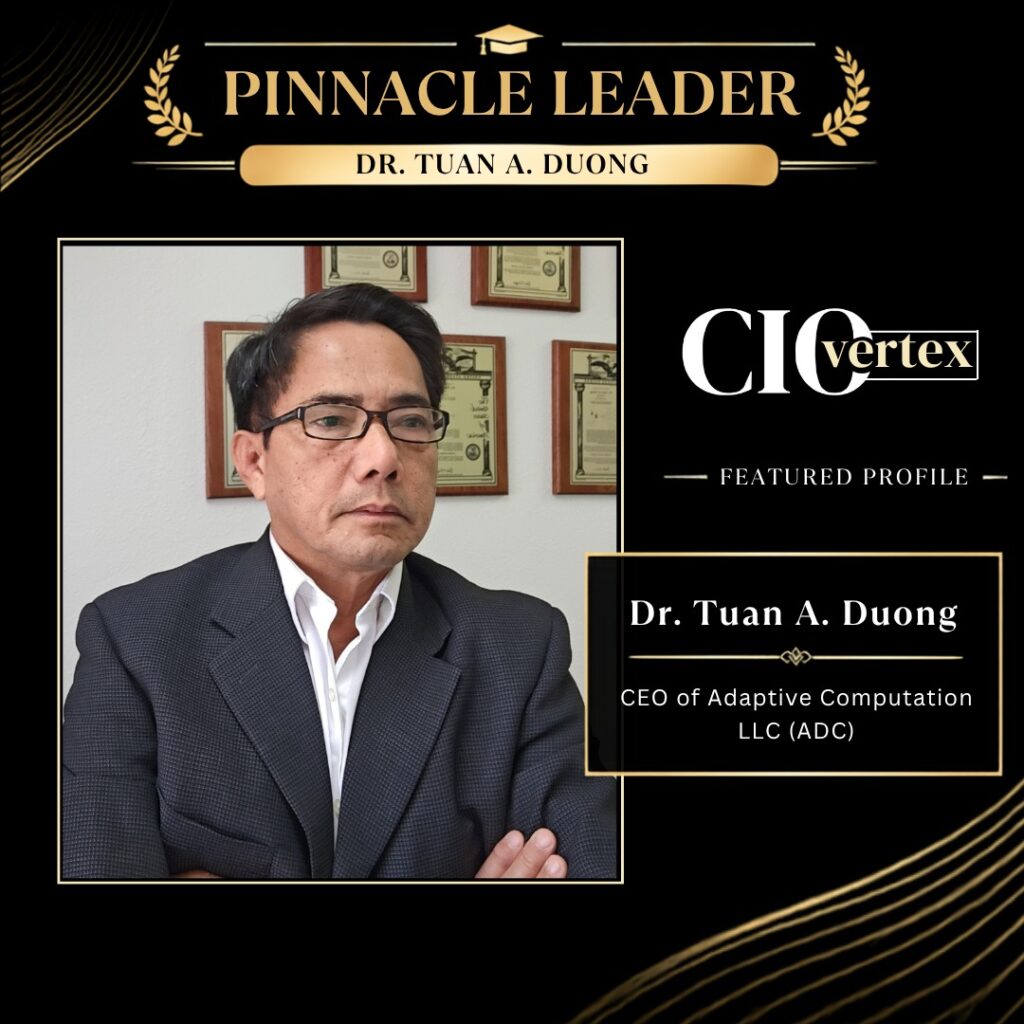
tuan cover page
Pinnacle Leaders

Dr. Tuan A. Duong

From Neural Networks to Autonomous Intelligence: Dr. Tuan A. Duong’s Vision for Adaptive Computing Introduction For more than three decades, Dr. Tuan A. Duong, Founder and CEO of Adaptive Computation LLC (ADC), has been exploring one of the most ambitious questions in modern technology: how can machines become capable of learning, adapting, and making intelligent decisions in real-world environments? With a career spanning artificial intelligence, cognitive computing, neuromorphic engineering, sensor fusion, machine vision, autonomous systems, and ultra-low-power computing, Dr. Duong has built his professional journey around connecting neuroscience and engineering. His work is rooted in the belief that the next generation of intelligent systems will not simply process information, they will need to learn continuously, adapt to changing environments, and operate efficiently at the edge. Today, through ADC, he is advancing biologically inspired building block functions along with neuroscience architecture and adaptive computing technologies for defense, aerospace, national security, and commercial applications. The Beginning: A Research Journey at NASA JPL Dr. Duong’s journey into advanced computing began in the summer of 1985, when he joined NASA’s Jet Propulsion Laboratory (JPL) as an intern working on neural computing systems. At the time, neural computing represented an emerging frontier. Dr. Duong and his colleagues explored neural computers capable of simulating neuronal activity using John Hopfield’s associative memory model. The experience introduced him to an extraordinary research environment where conventional boundaries could be challenged and new possibilities explored. He would ultimately spend 26 years at JPL, developing expertise across neural networks, neuromorphic hardware, machine vision, sensor fusion, electronic noses, autonomous systems, and ultra-low-power VLSI systems. More importantly, those years established the philosophy that continues to influence his work today: meaningful technological breakthroughs often emerge when disciplines intersect and researchers are willing to look beyond established approaches. From NASA Research to Adaptive Computation During his years at JPL, Dr. Duong contributed to technologies supporting planetary exploration, intelligent sensing, autonomous systems, and advanced computing architectures. His research resulted in 30 NASA New Technology Reports, peer-reviewed publications, and patented innovations spanning hardware neural networks, adaptive learning algorithms, cognitive computing, and AI-enabled sensing. After leaving JPL, he continued pursuing a central objective: bridging neuroscience, biology, and engineering to create intelligent systems capable of learning and adapting in real-world environments. That vision ultimately led to the establishment of Adaptive Computation LLC. At ADC, Dr. Duong leads the development of technologies designed to move beyond conventional AI architectures. The company focuses on adaptive learning, autonomous intelligence, cognitive computing, neuromorphic engineering, and low-SWaP (Size, Weight, and Power) edge AI systems. His broader vision is to bring biologically inspired intelligence into next-generation autonomous platforms through the combined development of software and hardware. Building Toward Self-Intelligent Systems Among Dr. Duong’s most significant areas of research is his work toward creating a feedback loop between short-term and long-term memory, which he sees as a potential building block for more autonomous and self-intelligent systems. On the software side, his research includes Extended Visual Pathway (EViP), an unsupervised learning approach inspired by the configuration of biological visual pathways, alongside Dynamic Supervised Learning, designed to continuously incorporate new information rather than relying exclusively on static training data. EViP demonstrated strong capabilities in visual recognition and adaptive object tracking, including challenging conditions involving noisy, low-resolution, incomplete, or changing visual information. Its development contributed to the Online and Adaptive Image-based Search Engine in the Loop (OAISEE) approach, which received a DARPA ERIS Awardable in 2025. Dynamic Supervised Learning addresses another important challenge in conventional machine learning: the fact that traditional supervised approaches often depend on fixed datasets, predefined architectures, and static labels. Dr. Duong’s approach is designed to accommodate evolving information, allowing new knowledge to build upon previously learned representations. Together, these concepts represent his broader pursuit of machine intelligence that can continuously learn rather than simply execute predetermined instructions. Where Software Meets Hardware Dr. Duong’s vision extends beyond algorithms. His ongoing hardware research includes a Modified Hybrid In-Memory Processing Architecture designed to improve tolerance to processing variations while supporting high-speed and low-power computation. His work on Real-time Adaptive Tracking Systems for Irregular Target Moving Trajectory in SWaP-C Approach resulted in a DARPA ERIS Awardable in 2026, adding another important milestone to ADC’s technology-development journey. He is also pursuing massive parallel learning mechanisms intended to significantly reduce learning time compared with conventional approaches, alongside compiler development designed to exploit parallel computation across ADC’s architecture. For Dr. Duong, the ultimate objective is not simply to create better software or faster hardware independently. It is to bring the two together into an integrated foundation for increasingly capable intelligent systems. Turning Research Into Real-World Technology Building deep technology is only one part of the challenge. As the leader of a technology-driven company, Dr. Duong recognizes that transforming research into commercially viable products requires persistence, resources, strategic planning, and the ability to navigate uncertainty. ADC has taken a technology-first approach, using bootstrapped funding to develop foundational technologies and protect key innovations through patents before expanding into application-focused products. The company is currently launching selected software and commercial-off-the-shelf-based products while preparing to pursue additional funding for its Hybrid Processing Unit (HPU), based on its hybrid in-memory processing architecture and compiler development. For Dr. Duong, this approach provides greater control over technological development and market timing, even though it can require more patience than an application-first business model. Finding the Right Environment for Breakthroughs Because ADC’s work is heavily influenced by neuroscience and bio-inspired computing, Dr. Duong acknowledges that its technologies do not always follow mainstream technology directions. That can make identifying the right customers, partners, and development environments particularly important. His work with DARPA has provided a significant validation pathway. ADC completed Phase I and Phase II of the AIE DARPA IP2 program, with Dr. Duong serving as Principal Investigator, while receiving ERIS Awardables in both 2025 and 2026. These milestones demonstrate how research rooted in unconventional technological concepts can progress toward practical applications when matched with the right opportunities and partners. Passion as the Driving Force Entrepreneurship in deep technology comes

sreerag cover feature
Pinnacle Leaders

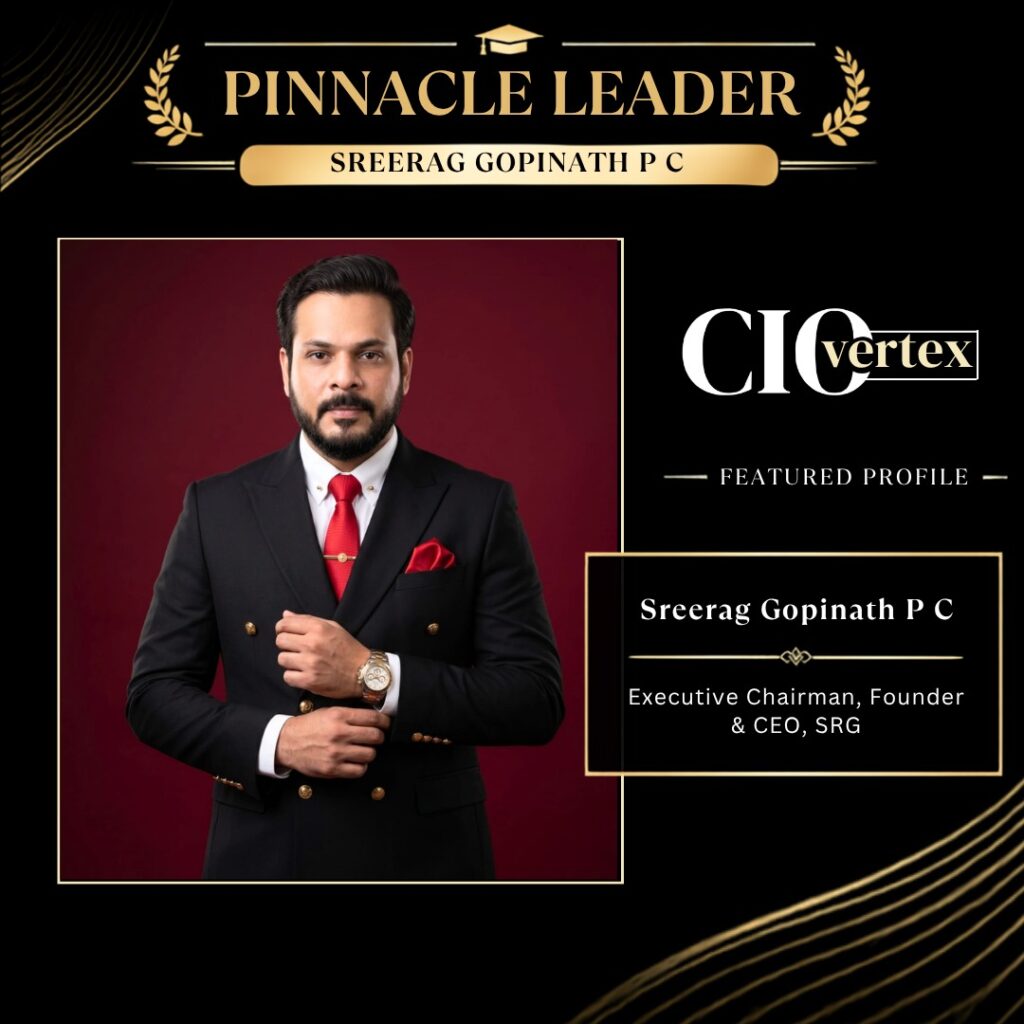
Sreerag Gopinath P C

Architecting the Intelligent Enterprise of Tomorrow Sreerag Gopinath P C Executive Chairman, Founder & CEO, SRG Introduction Leadership in the modern enterprise is no longer simply about managing people, technology, or processes independently. For Sreerag Gopinath P C, it is about creating the intelligence that connects them. With nearly two decades of experience spanning technology, enterprise transformation, global supply chains, and strategic leadership, Sreerag has built his career around a fundamental question: How can organizations scale without allowing complexity to outgrow human judgment? That question ultimately led him from technical execution and global corporate leadership to founding SRG, where he now serves as Executive Chairman, Founder, and CEO. His vision is centered on building an AI-first, digitally mature enterprise where intelligence becomes a native part of how organizations think, operate, create, and grow. The Spark: Where Technology Met Enterprise Vision Sreerag’s professional journey was shaped by an early realization that organizations rarely fail because they lack ambition. More often, they struggle when systems grow faster than human judgment and execution becomes fragmented across disconnected tools, teams, and priorities. As he entered the worlds of technology and global supply chain systems, he witnessed brilliant strategies lose momentum because of inefficient processes, fragmented execution, and disconnected systems. That experience sparked his fascination with system orchesation, understanding how strategy, technology, people, data, and execution can work together to create enduring enterprises. His early career required him to master technical execution before moving toward enterprise-wide transformation. From software development and project leadership to large-scale digital initiatives across India, the United States, Japan, Europe, and the Middle East, each experience expanded his understanding of how complex organizations function. Over time, one philosophy became increasingly clear: True innovation requires balancing speed with restraint, data with intuition, and structure with imagination. That philosophy eventually became one of the foundations of SRG. From Global Transformation to Architectural Mastery Sreerag describes his current chapter as “Architectural Mastery and Category Creation.” After progressing from hands-on technology roles into senior leadership positions with global organizations, he gained experience directing major transformation portfolios and navigating highly complex operating environments. His career included leadership experiences with organizations such as Oracle and KPMG, where he worked across large-scale enterprise initiatives and gained exposure to the challenges of managing transformation across markets, technologies, and business functions. The pivotal turning point came when he began to recognize the limitations of traditional management models. In high-stakes transformation environments, he saw that successful execution could not depend entirely on individual expertise or repeated human intervention. To scale effectively, organizations needed to codify what works, embed intelligence into their operating models, and create systems where excellence could be repeated without continuously adding complexity. That realization ultimately gave him the confidence to step beyond traditional corporate leadership and establish SRG. The transition was more than an entrepreneurial decision. It represented a shift from managing large-scale transformation to engineering the architecture for the next generation of enterprise. SRG: Building the AI-First Enterprise The defining achievement of Sreerag’s career is the conceptualization and development of SRG as an AI-first, digitally mature enterprise. His ambition extends beyond conventional digital transformation. Rather than treating artificial intelligence as an additional software layer or productivity tool, SRG is being developed around the belief that intelligence should exist at the core of enterprise operations. This means integrating AI into the way organizations make decisions, execute processes, understand markets, create products, and respond to changing conditions. One of the strongest demonstrations of this philosophy is the development of SRG’s expanding product ecosystem, with 31 envisioned product initiatives, including 18 actively developed, 10 in prototype stages, and 3 concept-ready. Managing such a portfolio requires more than creativity. It requires strategic discipline, cost consciousness, operational viability, and the ability to move ideas from conceptualization toward execution. For Sreerag, this represents the intersection of two worlds often treated separately: Analytical science and creative imagination. His vision is to prove that enterprise intelligence does not have to sacrifice creativity and that creative innovation does not have to compromise operational rigor. The Power of Intelligence, Creativity, and Execution One of the defining characteristics of Sreerag’s leadership philosophy is his refusal to separate technology from creativity. He believes the strongest organizations emerge when analytical intelligence and creative expression reinforce one another. Artificial intelligence can improve decision-making. Data can reveal patterns. Automation can accelerate execution. But creativity gives organizations the ability to imagine what should exist next. At SRG, this philosophy extends across the enterprise ecosystem, bringing together technology, AI, strategy, design, storytelling, and execution. Leading Through Complexity High-level transformation inevitably brings uncertainty. Market volatility, fundraising pressures, strategic prioritization, shifting technologies, and complex business decisions can place significant pressure on an organization. Sreerag’s response is grounded in three principles: Strategic Orientation.Maintaining clarity about the destination even when the path changes. Resilience.Remaining composed and adaptable when circumstances become difficult. Execution Focus.Turning strategic intent into measurable action rather than allowing vision to remain theoretical. These principles allow him to approach challenges not simply as obstacles but as opportunities to test ideas, refine systems, and discover new possibilities. What keeps him engaged is the potential of human ingenuity when amplified by intelligent systems. The opportunity to solve previously difficult business problems, transform enterprise friction into operational clarity, and create new possibilities continues to drive his work. Redefining Success Earlier in his career, Sreerag measured success through execution excellence, successful project delivery, technical recognition, certifications, schedules, teams, and increasingly complex responsibilities. Over time, that definition evolved. Today, success is less about isolated achievements and more about coherence, sustainability, and transformative impact. For Sreerag, a successful organization is not simply one that grows quickly. It is one that can endure, adapt, and continue creating value. Success means creating systems where intelligent automation frees people to focus on higher-value work, where design and functionality reinforce each other, and where trust becomes a long-term organizational asset. His ultimate measure is whether an organization can move beyond conventional industry practices and unlock value that previously remained hidden. What People Often Misunderstand About

steve o
Pinnacle Leaders

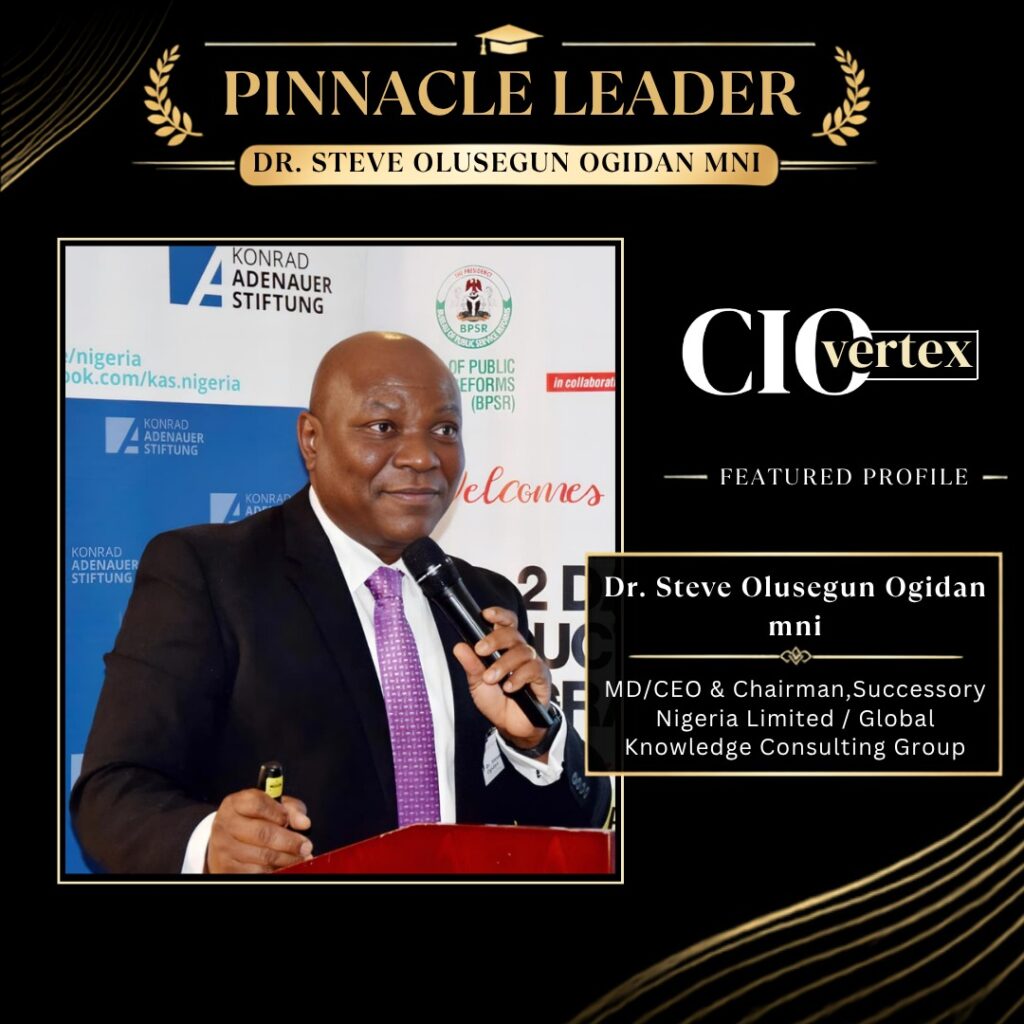
Dr. Steve Olusegun Ogidan

From Capacity to Continental Impact: Dr. Steve Olusegun Ogidan’s Vision for Building Africa’s Next Generation of Institutions. Introduction For more than two decades, Dr. Steve Olusegun Ogidan, mni, has worked at the intersection of development strategy, institutional capacity building, finance, governance, and enterprise growth. As MD/CEO and Chairman of Successory Nigeria Limited / Global Knowledge Consulting Group, he has built a career around a conviction that continues to shape his work: Africa does not simply need more funding, it needs the institutional capacity to turn resources into sustainable results. His journey has taken him from Nigeria’s financial institutions to international development assignments across Africa, working with governments, development finance institutions, multilateral organizations, and private enterprises. Along the way, he has helped design capacity-building frameworks, strengthen financial systems, support agricultural finance, develop MSMEs, and empower professionals across the continent. Today, his focus has evolved from building credibility and delivering individual projects to scaling impact through partnerships, technology, and people. The Real Development Challenge: Building Capacity Dr. Ogidan’s entry into development consulting was shaped by what he witnessed early in his career. While working with the former Peoples Bank of Nigeria and later the Bank of Agriculture, he saw a recurring disconnect between the resources available to support development and the institutional capacity required to deploy those resources effectively. Policies could be well designed on paper, yet communities and enterprises remained underserved because the systems, people, and organizational structures needed to execute them were missing. That experience became the foundation of his professional philosophy. When he eventually left the Bank of Agriculture to establish Successory Nigeria Limited, he carried with him a clear conviction: funding alone cannot transform economies. Sustainable development requires the ability to plan, manage, execute, and sustain growth. His commitment to continuous learning became an important part of that journey. From executive education and professional development at institutions including the International Labour Organization in Turin and Harvard Business School to further learning at Columbia Business School and the Boulder Institute of Microfinance, Dr. Ogidan consistently invested in expanding his knowledge. His objective was never simply to accumulate credentials. It was to bring international expertise and proven approaches back to Africa and adapt them to the realities of its economies. From Founder-Centered Consulting to a Scalable Enterprise Dr. Ogidan describes the current chapter of his career as “Scaling Impact Through Partnerships and Technology.” In the early years of Successory, the firm’s capacity was closely tied to its founder. Dr. Ogidan was simultaneously the consultant, trainer, strategist, and problem-solver. Eventually, he recognized that a company with continental ambitions could not remain dependent on one individual. That realization prompted a fundamental transformation. He began building teams, empowering younger professionals, and creating a flatter organizational structure in which even emerging professionals could take responsibility for projects and lead initiatives. The result was a consulting organization capable of operating far beyond the personal reach of its founder. One example of this evolution was Successory’s involvement with the NIRSAL Project Monitoring, Reporting and Remediation Offices, where the organization managed more than 850 staff across 37 locations in Nigeria while simultaneously delivering capacity-building initiatives across East and Southern Africa. For Dr. Ogidan, the lesson was straightforward: organizations cannot scale beyond the capacity of their founders unless they deliberately build the capacity of their people. Creating Solutions That Empower Africa Among the many accomplishments of his career, Dr. Ogidan considers his leadership of the international expert team for the ITC/ILO particularly significant. Between 2010 and 2012, the team designed curriculum and training manuals focused on Access to Finance for African Workers and Trade Unions. The assignment represented more than a conventional consulting engagement. It was an opportunity to create practical tools capable of helping workers across Africa better understand and access financial services. The work strengthened Dr. Ogidan’s position as a thought leader in development finance while reinforcing his belief in the importance of knowledge transfer and institutional capacity. His more recent work has expanded this impact. In 2024, he was selected by the African Development Bank to lead the Steadman Global Consulting Design Team for the Skills, Entrepreneurship, and Enterprise Development (SEED) Project for the Government of Angola. The initiative focuses on skills development, entrepreneurship, and enterprise growth as mechanisms for addressing youth unemployment and supporting economic diversification. Working alongside specialists in enterprise development, innovation, digital economy, and vocational training, Dr. Ogidan helped develop a comprehensive framework designed to support Angola’s development priorities. His work in Mozambique has similarly reflected his belief in African knowledge exchange. As lead consultant to the Food and Agriculture Organization (FAO) on blended finance in agriculture, he facilitated a high-level delegation from Mozambique, including representatives from its Central Bank, Ministry of Finance, and the British High Commission, to study Nigeria’s agricultural financing ecosystem. For Dr. Ogidan, such initiatives demonstrate an important principle: African countries possess valuable solutions that can be adapted and shared across the continent. Turning Competitors into Collaborators One of the characteristics that distinguishes Dr. Ogidan’s leadership philosophy is his emphasis on collaboration. Rather than viewing consulting as a constant competition for market share, he believes organizations can create greater value by combining their strengths. Over the years, Successory has developed partnerships and professional relationships with major institutions and organizations, including the World Bank, IFAD, PwC, and the Development Bank of Southern Africa. Some competitors have even become collaborators. For Dr. Ogidan, this approach reflects a broader philosophy: development challenges are too large and complex for any single organization to solve alone. Partnerships allow expertise, resources, networks, and ideas to be combined in ways that create greater and more sustainable impact. Redefining Success Through Legacy Earlier in his career, Dr. Ogidan measured success through professional milestones, the institutions he worked with, certifications he earned, and scale of projects he managed. Today, his definition has changed. Success means creating systems that continue to function and create value without his constant involvement. Whether it is a professional certification program continuing to train development finance practitioners across countries such as Zambia,

kenneth pincle leader
Pinnacle Leaders

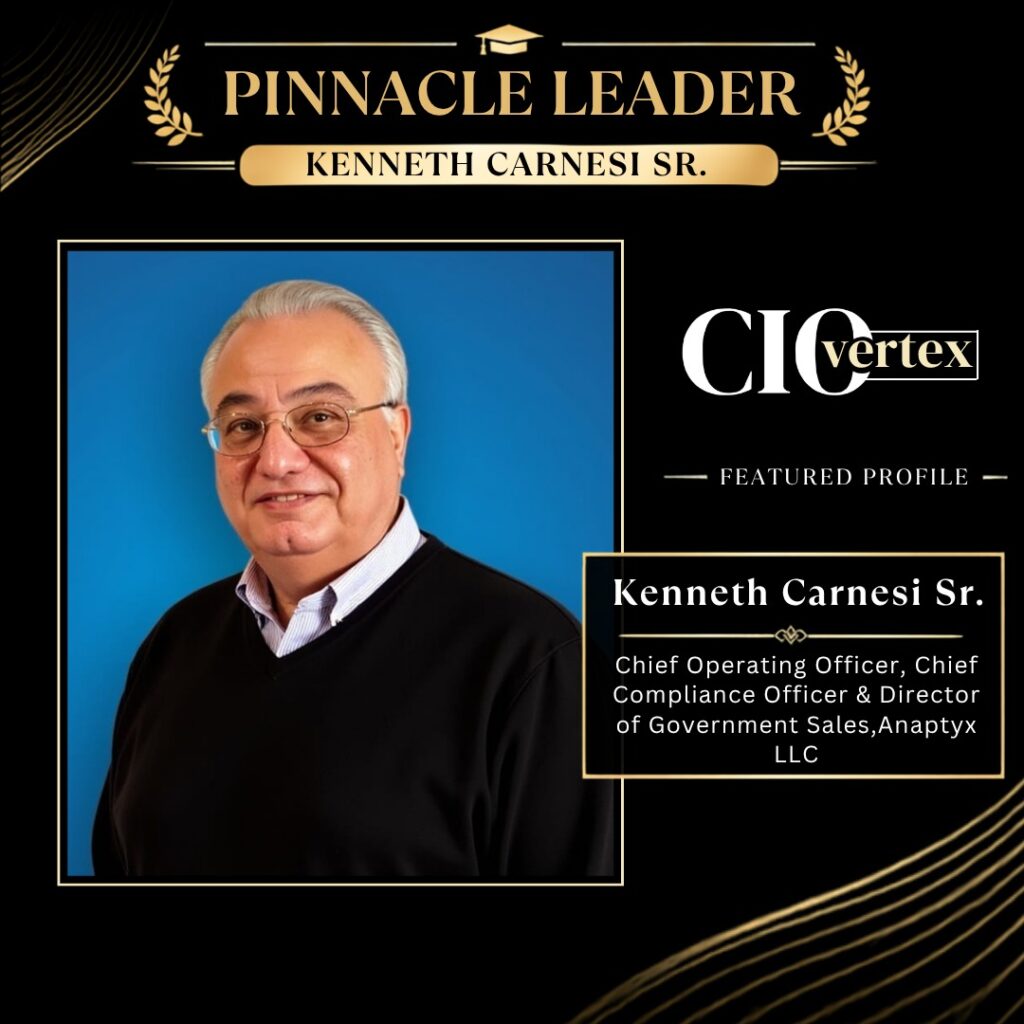
Kenneth Carnesi Sr.

Built Through Adversity, Guided by Integrity Chief Operating Officer, Chief Compliance Officer & Director of Government Sales | Anaptyx LLC Introduction Some careers follow a straight path. Others are shaped by reinvention, resilience, and the courage to begin again. Kenneth Carnesi Sr.’s journey belongs to the latter. From practicing law in New York to advising Fortune 500 companies across emerging international markets, and from experiencing a devastating personal setback to helping build a national technology and government-contracting operation, Carnesi’s career has consistently been guided by two principles learned from his parents: education and integrity. Today, as Chief Operating Officer, Chief Compliance Officer, and Director of Government Sales at Anaptyx LLC, he brings decades of experience in law, international business, technology, compliance, and operations to an industry where precision and trust are essential. Yet for Carnesi, leadership has never been defined solely by professional titles. It is about remaining useful, continuing to learn, protecting the people around you, and turning difficult experiences into something that can help others. The Spark: Where It All Began Growing up in Brooklyn, Carnesi was taught early that education was essential and integrity was non-negotiable. He earned a bachelor’s degree in English from Brooklyn College, a master’s degree in criminal justice from C.W. Post, and a Juris Doctorate from New York Law School. He then spent two decades practicing in New York, developing the precision and discipline that come with working in an environment where a single word can have significant consequences. His career took an unexpected turn in 1991 following the collapse of the Soviet Union. Recognizing an opportunity in rapidly emerging markets, Carnesi built an international consultancy and advised companies including Motorola and Qualcomm across Central Asia, the Caucasus, Russia, and Western Europe. That experience taught him one of the lessons that would remain with him throughout his career: Opportunity rarely announces itself. You have to recognize it and move. From Law to Global Business Carnesi describes his professional journey through three major chapters: approximately twenty years in law, fourteen years advising Fortune 500 companies internationally, and his current chapter with Anaptyx LLC. Each chapter contributed something different. Law taught him precision, discipline, and regulatory thinking. International consulting taught him adaptability, cultural awareness, and how to operate in environments where there was no established playbook. His current work combines those experiences. At Anaptyx, Carnesi serves as Chief Operating Officer, Chief Compliance Officer, and Director of Government Sales, operating at the intersection of technology, compliance, government contracting, and business operations. His legal background remains highly relevant. Managing government contracts and regulatory responsibilities requires the same attention to detail and accountability that defined his early professional life. The Turning Point: Rebuilding After 2004 The defining chapter of Carnesi’s life came in 2004. A legal dispute in Europe resulted in the loss of his home, possessions, and the professional life he had built over more than two decades. It was, by his own description, rock bottom. But he was not alone. His wife, Daria, stood beside him, providing the support that helped him find his footing again. Their forty-eight-year marriage remains one of the most important sources of strength in his life, alongside his faith. Rather than allowing the experience to define him, Carnesi transformed it into purpose. He eventually wrote an inspirational trilogy—After the Fall, Get Back Up, and Unfinished Business—to help people facing their own difficult chapters. The greatest reward was not the recognition the books received, but the messages from readers who said his words helped them through their own struggles. That experience fundamentally changed how Carnesi defines success. Professional achievements can be lost. Integrity and dignity cannot—unless you choose to surrender them. Building Anaptyx Through Trust and Precision Today, Carnesi applies the lessons of his legal, international, and business career to Anaptyx LLC. One of his significant professional accomplishments is Anaptyx’s twenty-year GSA Schedule 70 contract, an achievement requiring substantial regulatory groundwork, consistency, and attention to compliance. His responsibilities extend beyond technology itself. Through the company’s Government Contracts and Regulatory Compliance functions, he helps ensure that operational execution and regulatory responsibility remain aligned. For Carnesi, managed Wi-Fi is not simply about installing equipment and keeping networks operational. It is about reliability, relationships, regulatory discipline, and delivering on promises. His legal background therefore remains central to his leadership rather than being simply another chapter on his résumé. Technology powers the service; compliance protects the trust behind it. A Leader Who Refuses to Stop Learning One of Carnesi’s defining characteristics is his commitment to continuous learning. At 73, he continues taking coursework in artificial intelligence and has pursued additional education and certifications in entrepreneurship, corporate compliance, operational analysis, and cybersecurity. He believes that experience should never become an excuse to stop learning. Technology evolves. Industries change. Younger professionals enter the workplace with new skills and perspectives. Rather than resisting those changes, Carnesi chooses curiosity. His approach is practical: maintain regular client conversations, conduct quarterly SWOT reviews, monitor technological developments, and continue improving the business through consistent daily execution. For him, leadership is not built only through major decisions. It is built through the small, repeated actions that compound over time. Stay curious. Keep learning. Do the work. Redefining Success Earlier in his career, success was measured through conventional professional milestones, titles, partnerships, clients, and career growth. The events of 2004 changed that perspective. Today, Carnesi measures success through things that are more difficult to lose: family, integrity, meaningful work, and the ability to help others. His forty-eight-year marriage to Daria represents one of his greatest personal achievements. His team’s ability to execute effectively represents another. And the impact of his books on readers provides perhaps the most personal measure of all. Awards and contracts still matter, but they are no longer the entire scoreboard. Success, for Carnesi, is about creating something that remains valuable beyond the moment. Two Careers, One Philosophy Carnesi’s technology career and writing career may appear different, but both originate from the same place: lived experience. His professional work is shaped

Scroll to Top